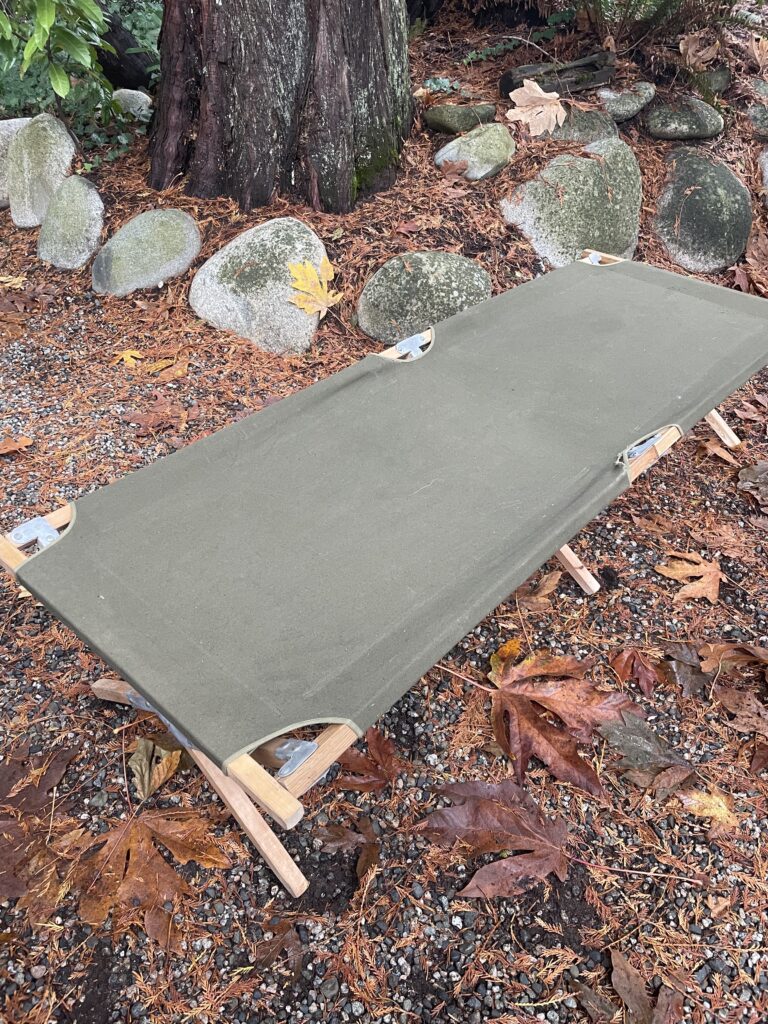
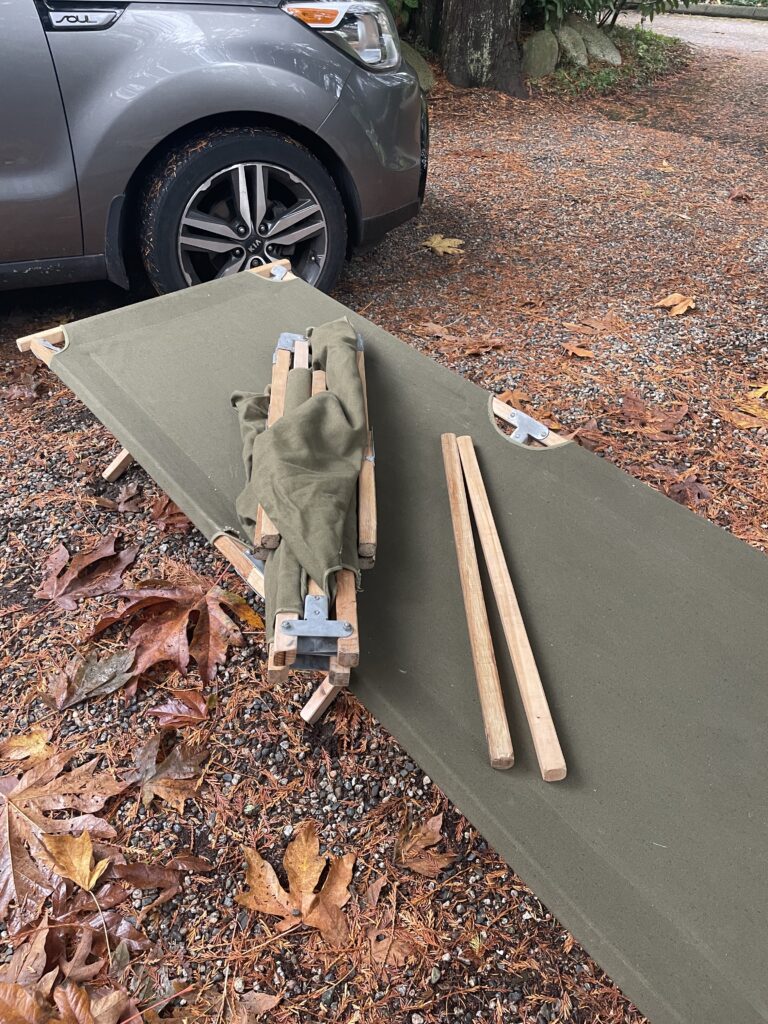
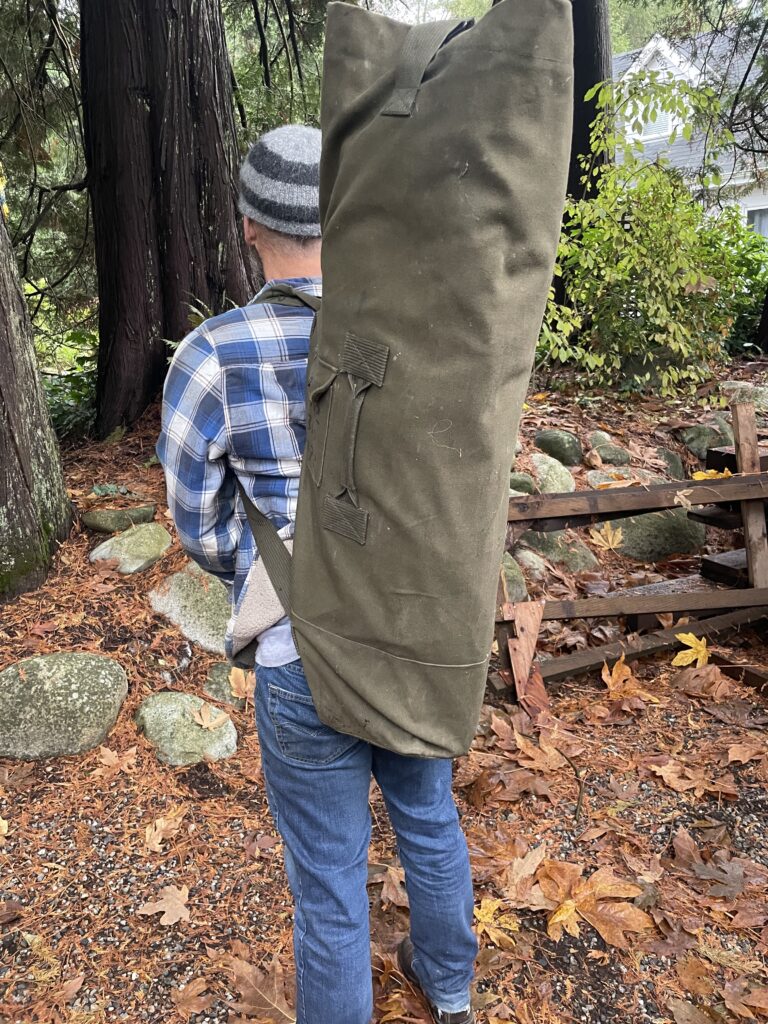
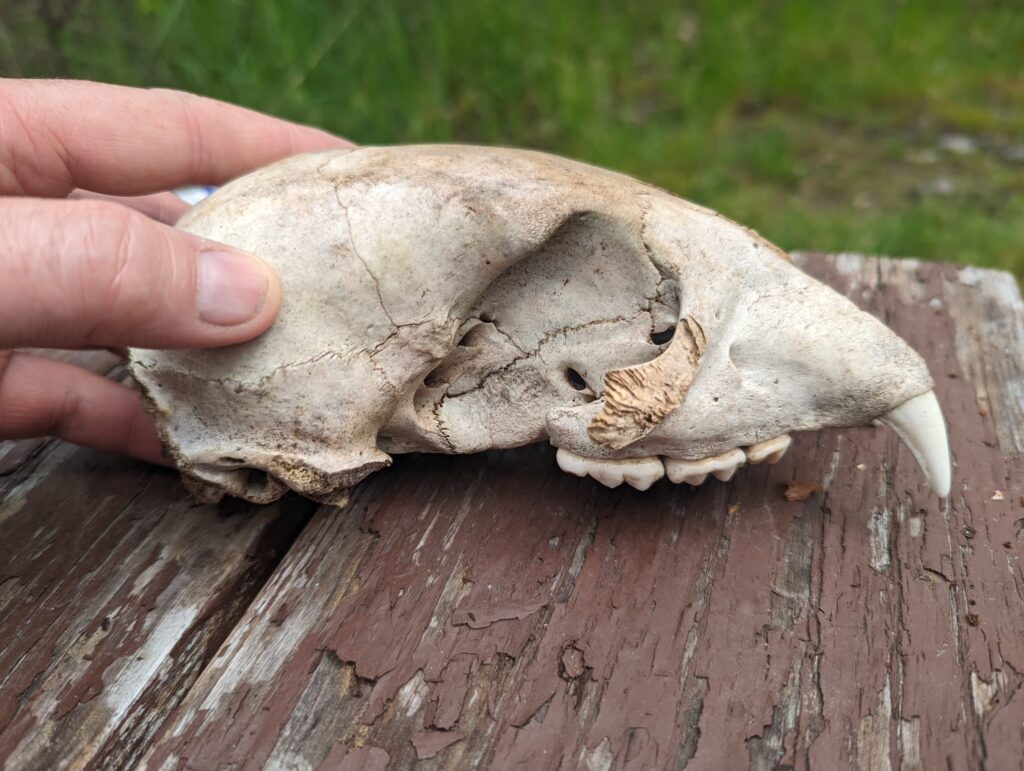
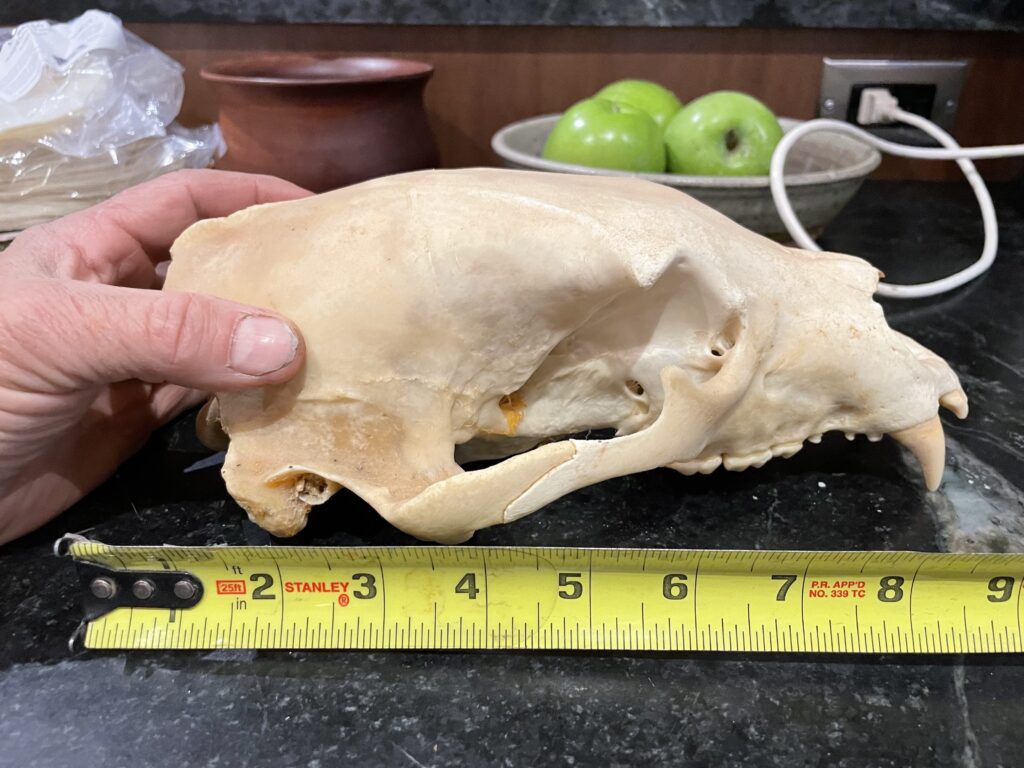
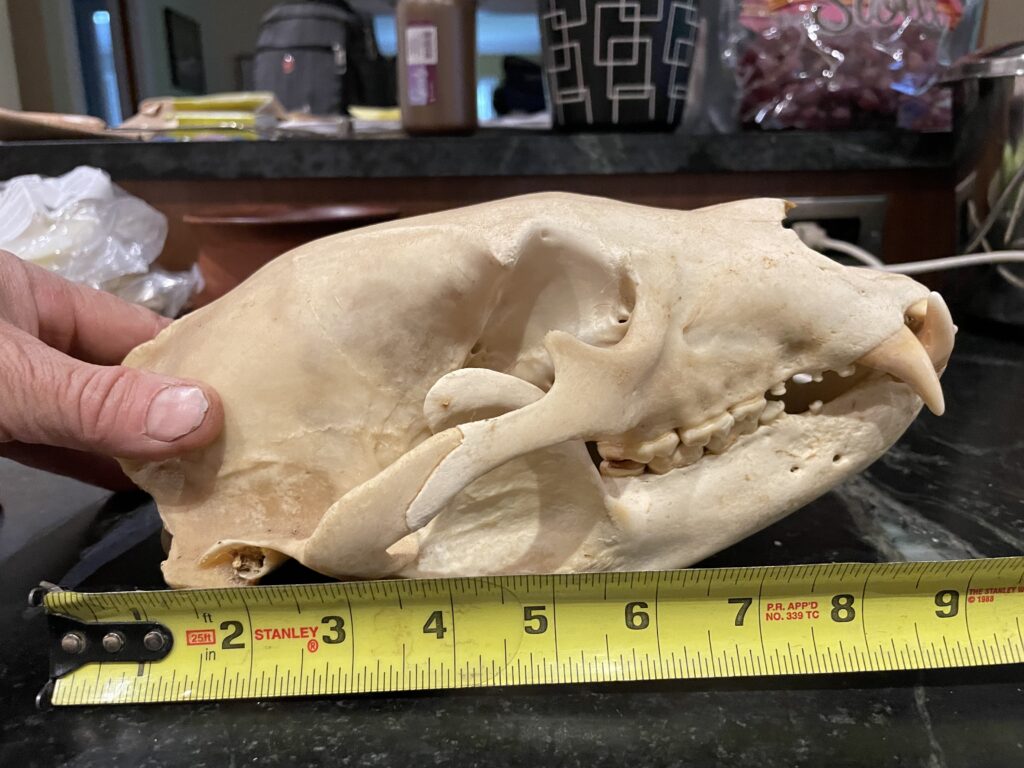
I just bought a wall tent off Facebook Marketplace and the seller threw in two wood frame folding camp cots.
They are the same design as what you’d get from Cabelas, only made of wood. If you find yourself camping in a wall tent in the winter these are exactly the kind of cots you need.
They are completely functional. Call/text me at 604-230-4225 or email rob@robchipman.net
The plight of steelhead in BC is not well known to the general public. Some Fraser River system steelhead are in particularly bad straits.
What are termed “Fraser River late-run summer steelhead” is actually 10 different spawning stocks that utilize the Fraser watershed upstream of Hell’s Gate. A sub-group referred to as “Thompson and Chilcotin Steelhead” comprises 6 out of these 10 stocks. Although the label “Thompson and Chilcotin steelhead” has been hitting the news fairly regularly for the past few years, the problem is still not well enough understood.
If you do a quick Google search of the term and click on the “News” option you will see headlines like:
Fisheries Official Denies Coverup allegations over research into endangered BC steelhead
DFO Sup[pressing Research on steelhead
Thompson, Chilcotin steelhead trout in danger of extinction
The bad news goes back years and years.
This year we got some good news. On October 19 Robert Bison, Fisheries Stock Assessment Biologist, Fish and Wildlife, BC Ministry of Forests, released some numbers:
Total population forecast for spawning steelhead in the Thompson/Chilcotin systems is 505 (great news);
The population forecast for spawners in the Thompson is 339 (again, great news);
The population forecast for spawners in the Chilcotin is 166 (again, great news).
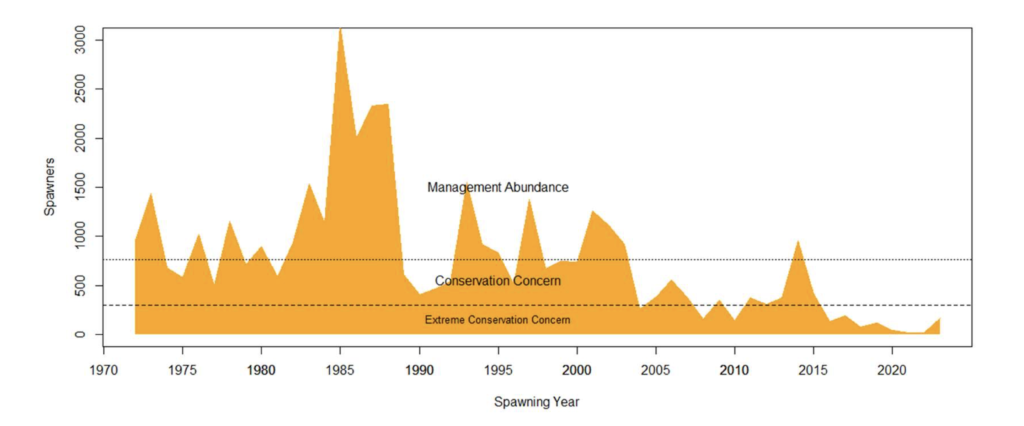
Here’s the problem: steelhead have been down so long that *everything* looks like up. That “great news” that I’m referencing? As Rob Bison points out, those numbers qualify as “Extreme Conservation Concern”. The spawner abundance for the Thompson ranks 40th out of a 44 year monitoring timeframe. The Chilcotin is just as bad – it ranks 44th out of a 52 year monitoring time frame.
For those who like graphics to demonstrate what’s up, here are two:
Thompson steelhead. The graph should go up and to the right, not down. This is so bad it’s hard to believe. Granted, 1985 was a good year, but numbers were estimated to be 3,510 for the Thompson.Chilcotin steelhead. This graph is even worse than that Thomson steelhead graph. Again, 1985 was a good year, but estimates then were 3,149.
You can find Rob Bison’s release here. If I understand his release properly these numbers are spawners that return in late 2022, but will spawn in 2023.
What does this mean? Simple. It means we have to pull all the levers to save these fish, that we have to pull them hard and we have to pull them now. Habitat destruction, pinniped predation and unsustainable bycatch needs to stop. BCWF has been championing this issue and you can get some good background from the BCWF website. (North Shore Fish and Game is a BCWF member club and proud of it). You can find lots more info about the plight of steelhead on the web as well – for example at Steelhead Voices.
What should you do? The simplest thing is to contact your MLA and let them know that you care about steelhead. It’s really simple. Click the appropriate link below and send an email. You can use my text or put in your own.
“Dear [insert your MLA’s name]
I live in your constituency and you are my MLA.
Interior Fraser steelhead are on the brink of extirpation. Something must be done. We need an immediate COSEWIC listing for IFS as well as a SARA listing (something the BC Ministry of the Environment has pressed the Feds for in the past). I am very concerned about this issue and want you to take some kind of action. Please let me know that you support saving these fish by return email.
Thanks and regards”
If you’re on the North Shore here are quick links:
Ed has created a Facebook community chat group called “NSFGC community chat“, which you can reach by clicking on the link. It’s a place to connect get advice and share information about fishing ,hunting and Conservation for the members and friends of the North Shore Fish and Game Club.
The idea is to create a group chat to improve communication between members and potential new members of the North Shore Fish And Game Club. In the past we’ve used our monthly bulletin as well as WhatsApp chat groups to share information about club hunts, derbies and other events, but this community page should be a great improvement.
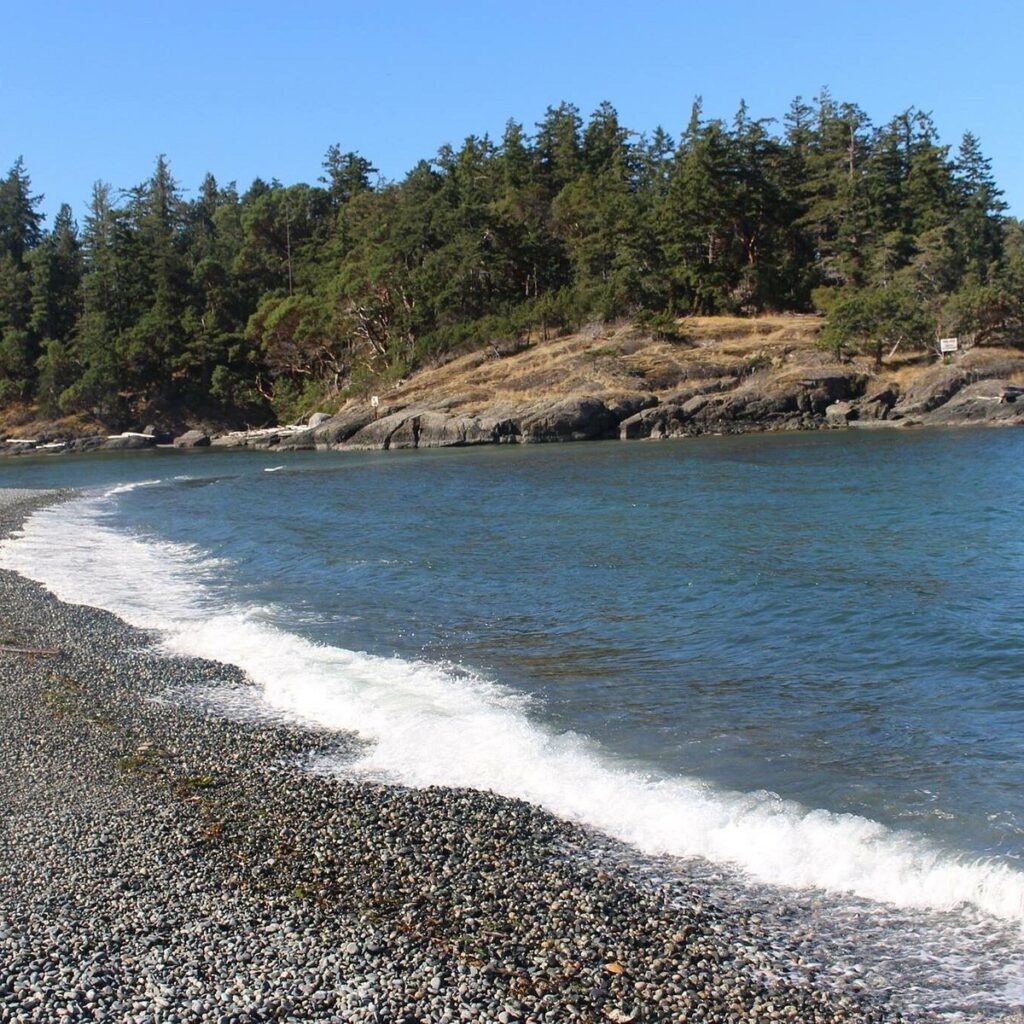
For those who don’t know, Texada is an island just off Powell River. There are multiple ferry rides involved but the trip is short overall.
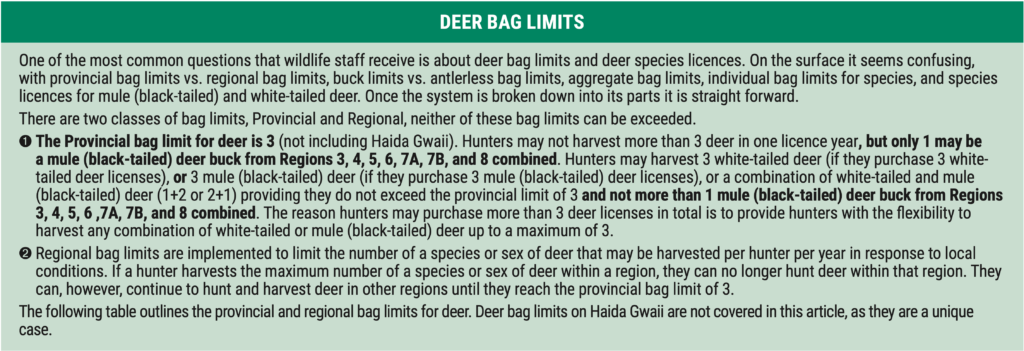
The bag limit on Texada is 3 deer
The provincial bag limit for deer is also 3, so if you are successful with three deer on this trip please remember that you can’t go get more deer in November in the Interior. Exceptions to this rule apply for those who hunt on Haida Gwai.
Some members will stay the whole time while others will leave earlier (some, no doubt, to hit Region 3 or 8 for a big muley!) Carpooling can be arranged. There is a WhatsApp chat about the hunt that will keep you up to date. Contact Ed Powell at (604)-358-5417 to get included in that chat or contact me directly at 604-230-4225 for more info.
I was fortunate recently to travel to the Interior with three BCWF staff members, Jesse Zeman, Neil Fletcher and Tobias Rohr, to meet with elders and staff of a First Nation that BCWF has collaborated with in the past.
A 4:30 wake up call was in order so that we could make it to the band office by 10:00, and like most trips to the Interior the first half hour or 45 minutes sucked, but once we were on the highway and driving through the Valley everything looked better.
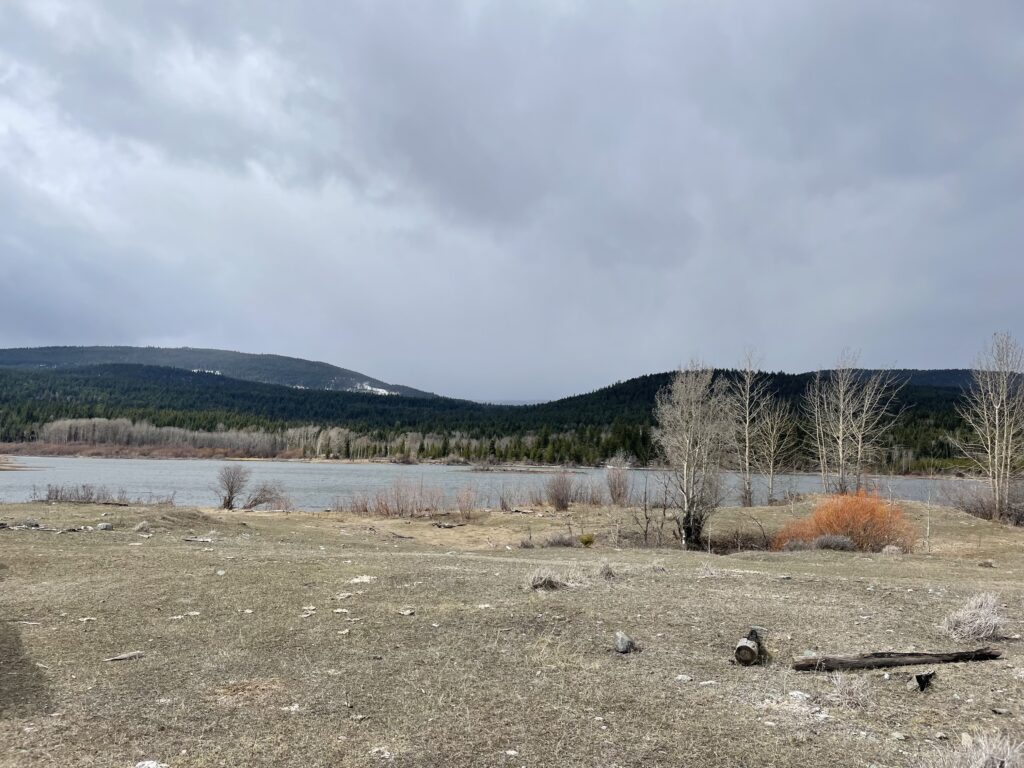
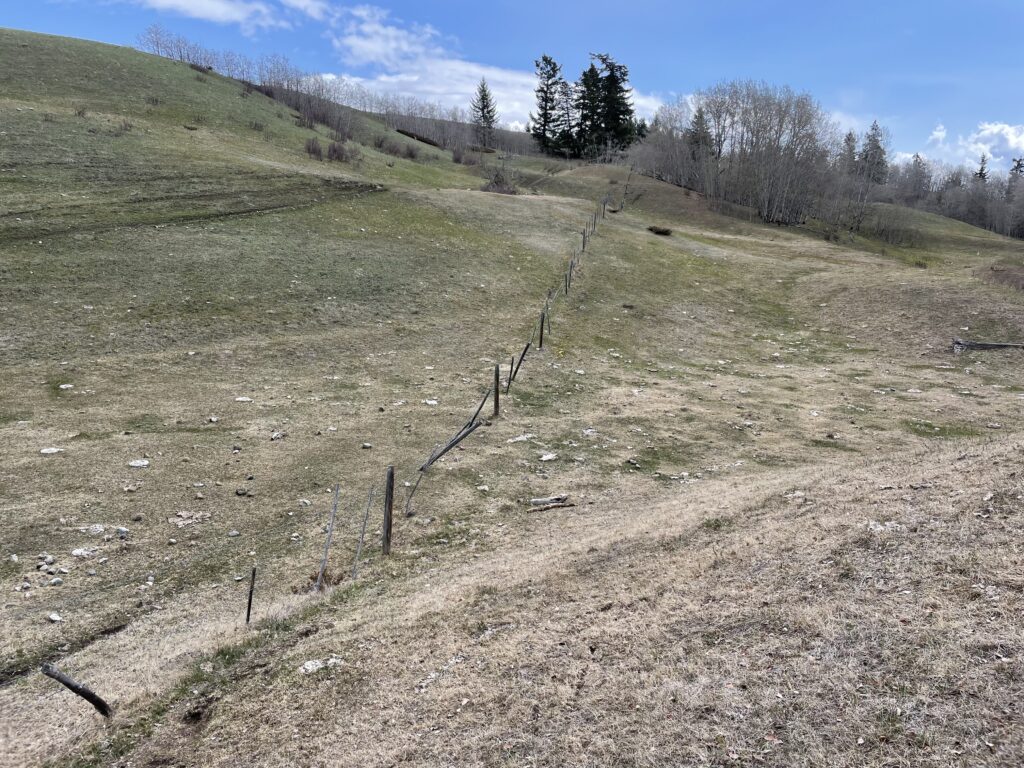
We looked at two different sites. The first was a high altitude lake whose surrounding are had been very over-grazed and whose shores had been damaged by cattle. A good solution in this case is to reduce the amount of cattle in order to leave some food for ungulates, and failing that, fencing all or most of the lake to protect the shoreline. Another issue is that much of the water from the lake is utilized for irrigating hay crops. This can be bad for fish because it can lower the level of the lake further than normal, exposing spawning beds.
With so many competing interests a lake like this is hard to rehabilitate. Ranchers need water and grazing and restricting that costs them real money and hardship. They have range leases and water licenses and it’s hard for conservationists to overcome those challenges.
At this lake we met with the band elders, some of whom had lived on this site in the 1950s.
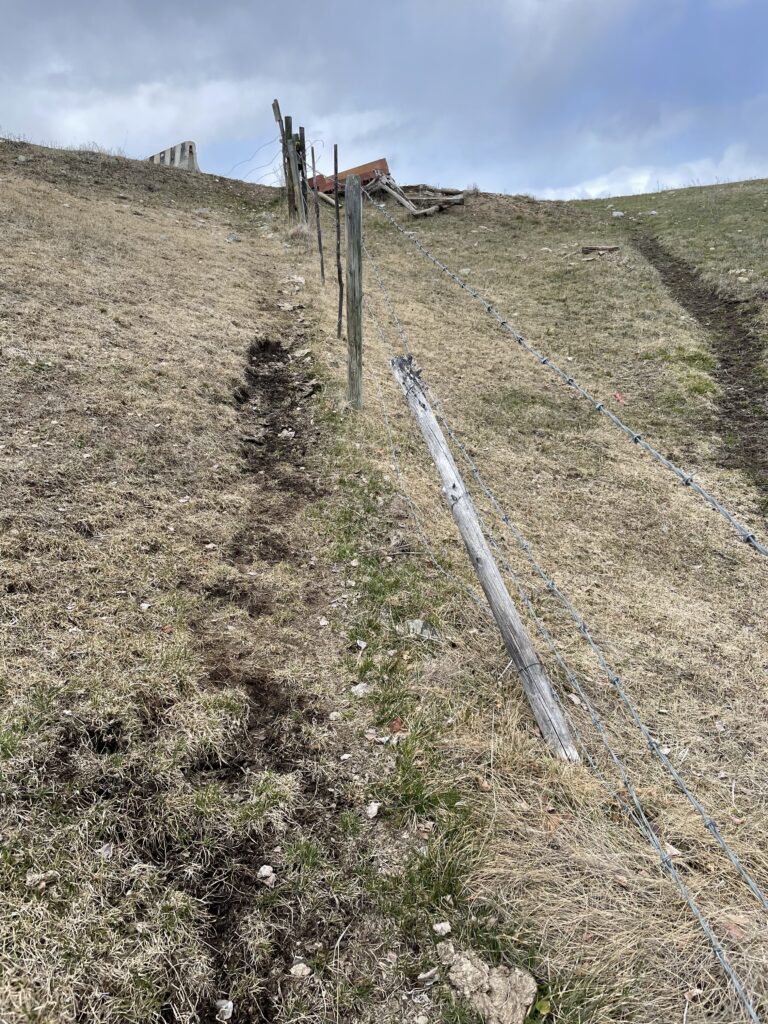
Overgrazing is hard to control as well. Fences are in disrepair and the ranchers are not required to repair them.
You can see at the top of the picture a cattle guard removed to restrict access, but that doesn’t stop cows, only drivers. The cows just walk over the fences, go down to the lake to get water, and destroy the shoreline.
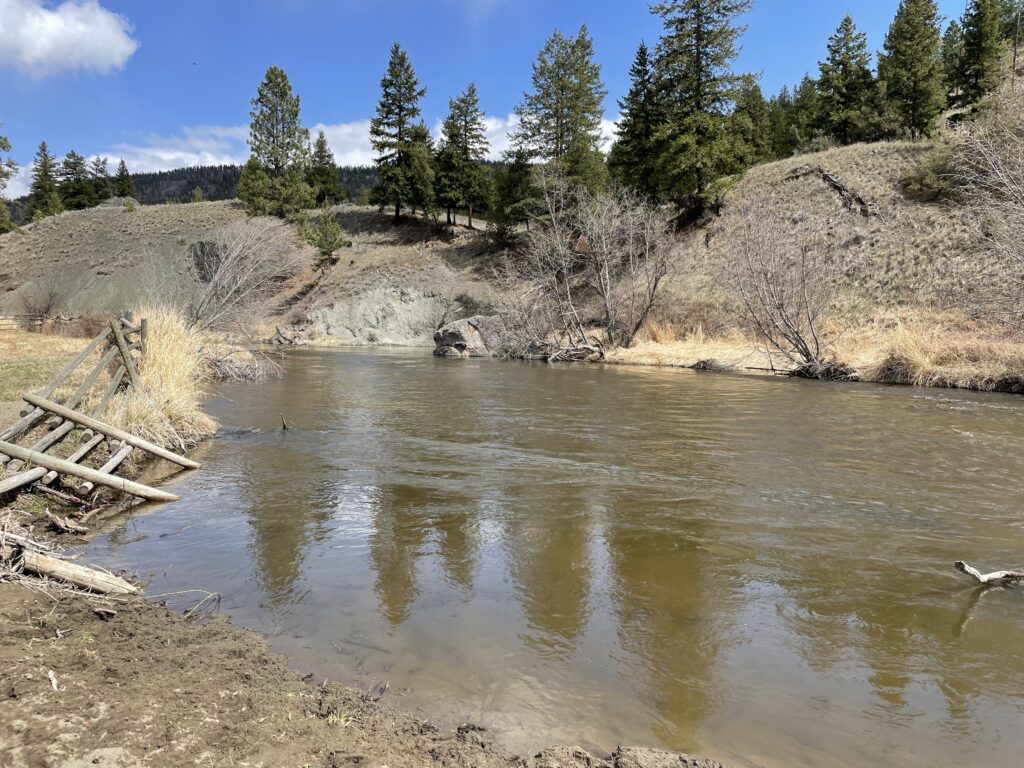
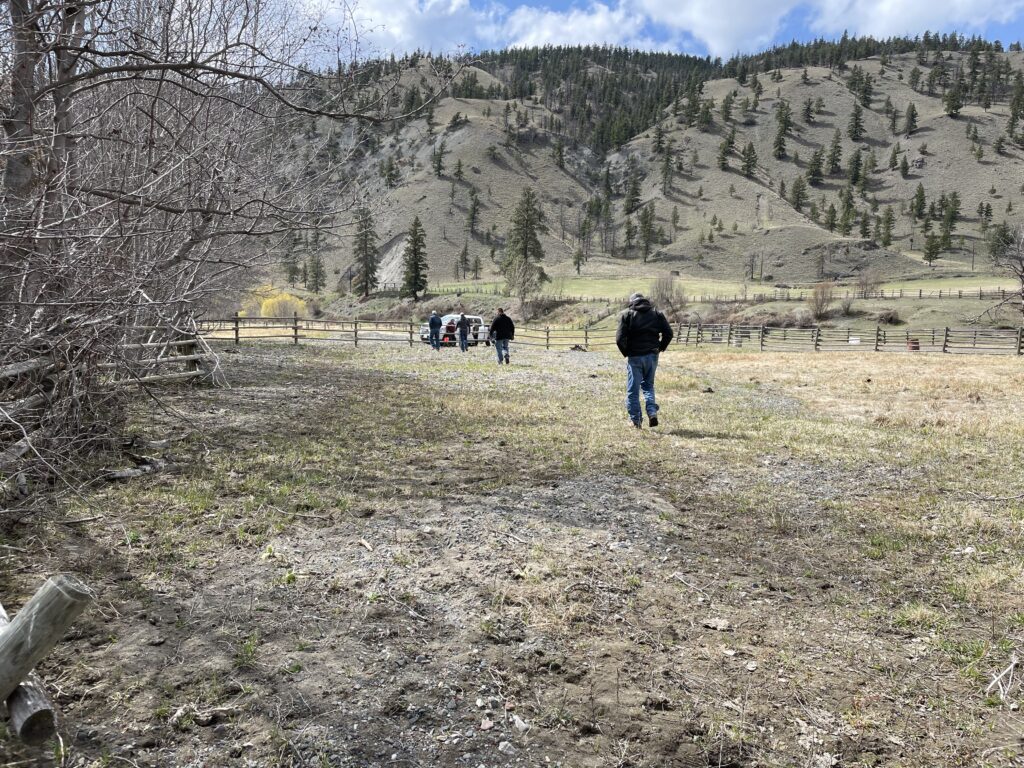
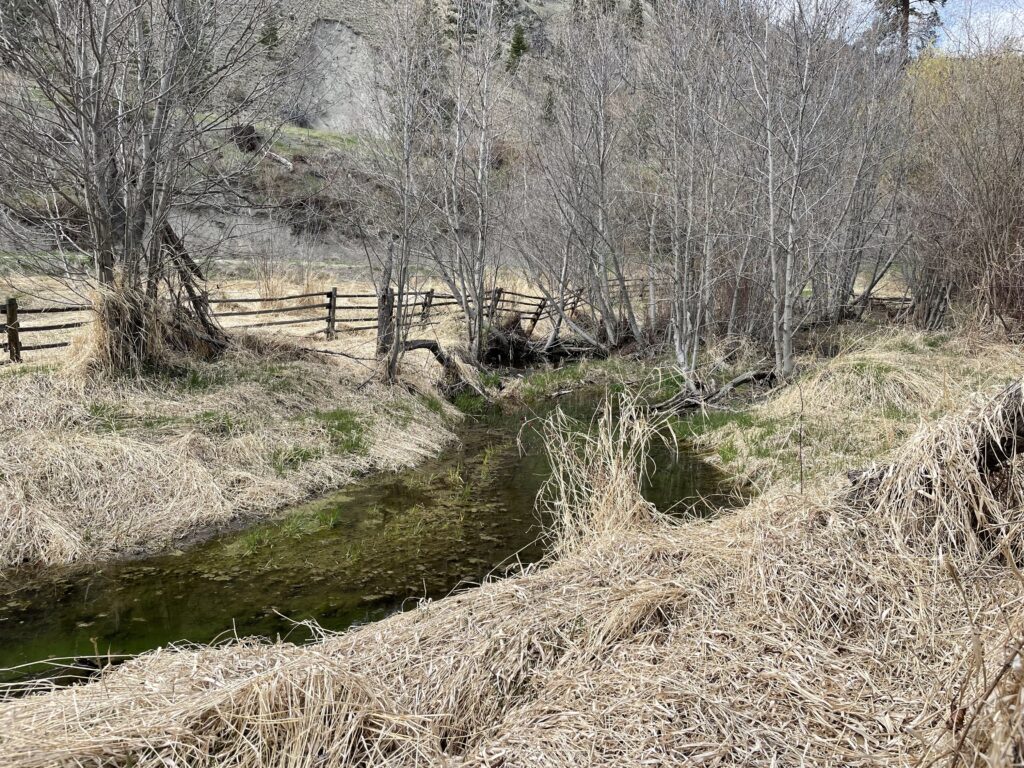
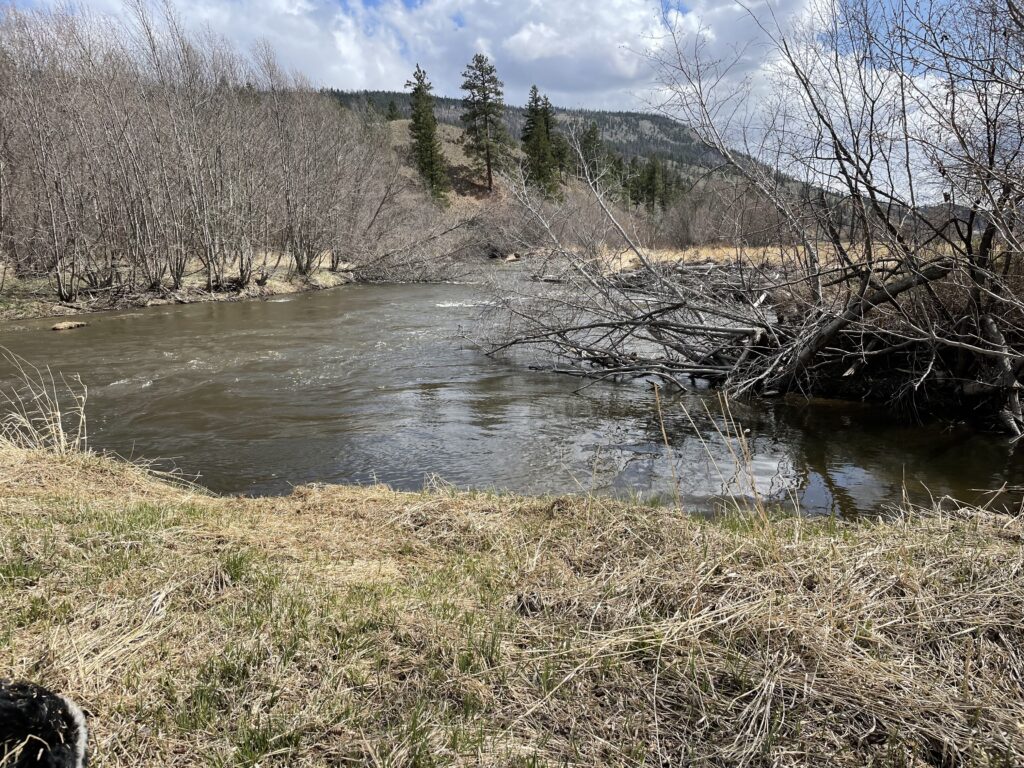
The second site was much better. It is completely contained within a parcel of private land so there is only one person to make the decision about whether we can do something on his land (and he is supportive). He has a large field that is bordered on one side by a river and on the opposite side by a hill. Along the base of the hill is a secondary watercourse that takes floodwater and groundwater from the river for a length of a few kilometres before emptying back into the river.
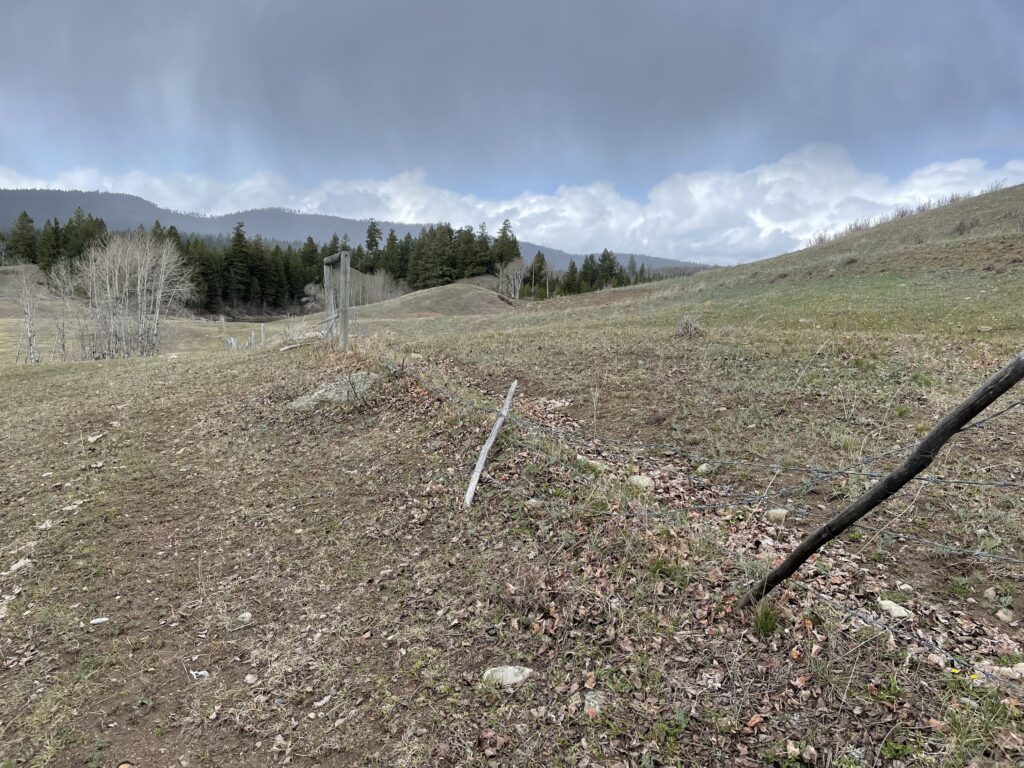
The plan is to deepen the watercourse and add dead end branch stems whenever possible, and feed it from an intake on the upstream side on the river. We’ll connect the hillside watercourse to the river by way of a ditch across the field. During high silt flood times we’ll close the intake to prevent sedimentation, and re-open it when the water clears up again. The picture above shows where the intake would be placed. The picture below shows the field that the water already crosses during floods, but which we’ll manipulate to have a constant, controllable flow (and by “we” I mean all member clubs of BCWF).
This will create what some fish nerds and wetlands nerds refer to as “frog water”. When you find the kind of water where you’d imagine finding frogs it’s often great habitat for coho. Good habitat can increase coho fry density by a huge factor.
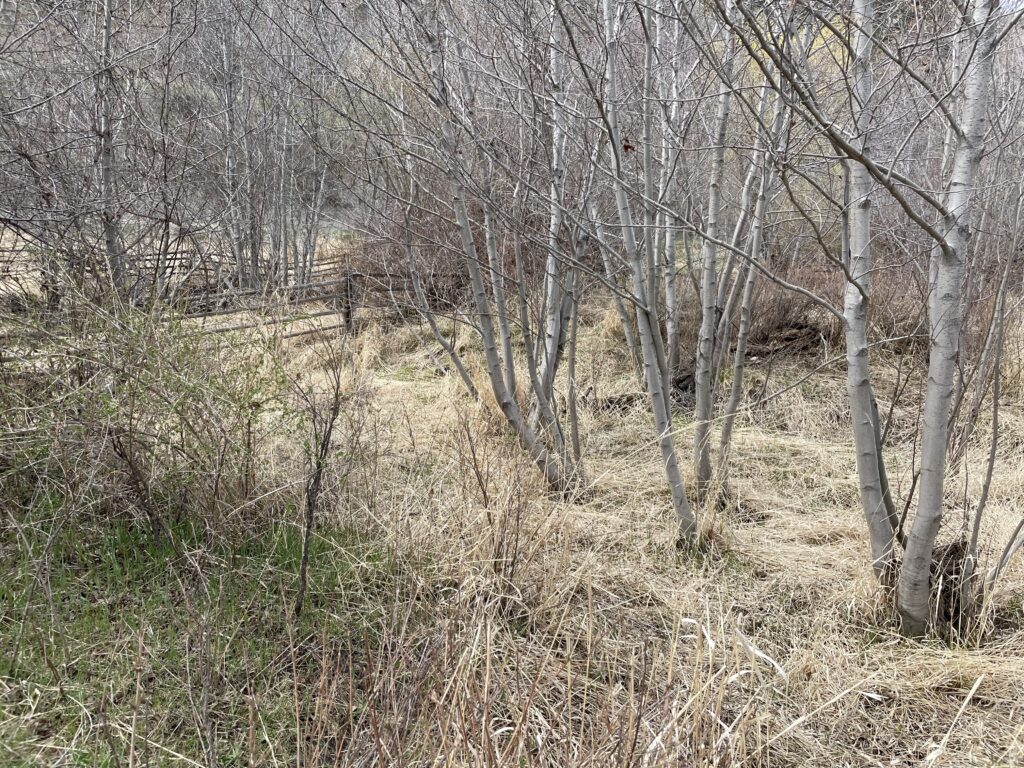
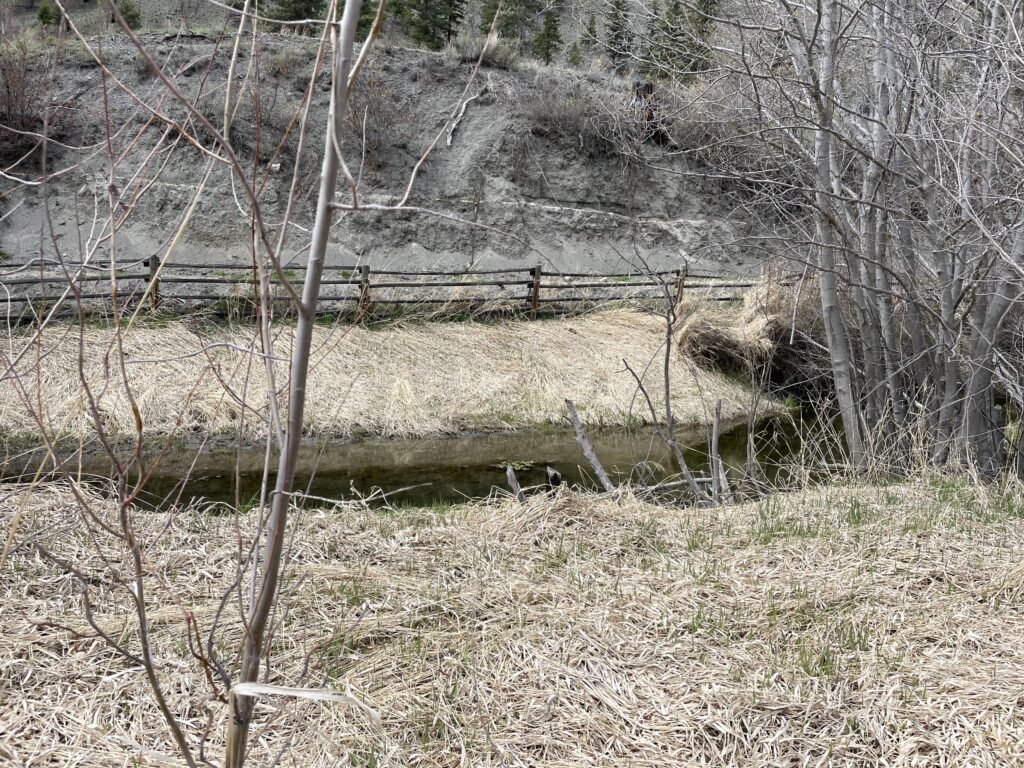
The images above show the in-grown watercourse. An excavator will spend about 20 days cleaning these out, making them at least 3 feet deep and adding branch stems for more habitat.
This is the end of the rearing channel, where the water taken out of the river a little upstream feeds back into the river again.
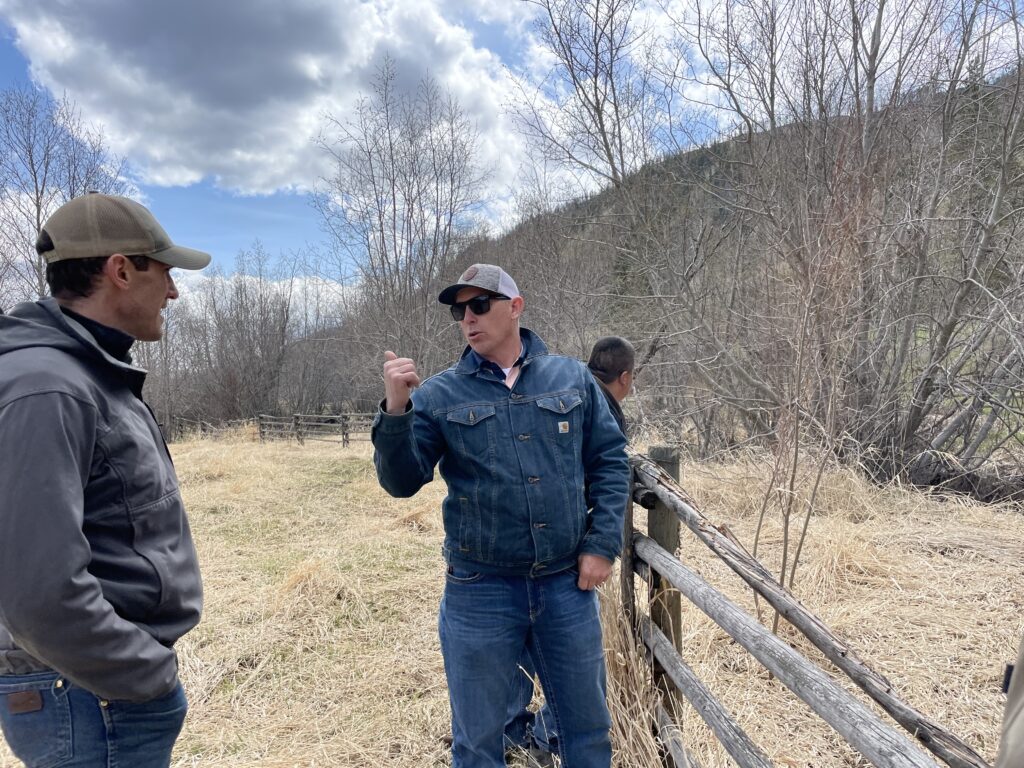
A long time, very experienced fish nerd, Sean, explains that not only will coho use this channel to rear fry, but will most likely return to spawn. In the picture with Sean is Jesse Zeman, Executive Director of BCWF, and First Nation member Keith. Although the nation’s elders accompanied us to the second site as well it was a long walk and most of them stayed back at the ranch buildings.
The total cost is expected to be somewhere between $125,000 and $200,000, and the habitat could easily add 200,000 fry each year, so it’s good value for the money. In fact, the project is so good that when I asked Neil Fletcher to rate it on a scale of 1-10 compared to all the other projects he does he gave it a 9.5.
What’s interesting about this project though, really, is the collaboration. The BCWF, the rancher and the First Nation are all going to be hands on in making this happen. The First Nation will provide some funding, equipment and staff to work on it. It’s unlikely that their members will ever catch any of the coho, but even if they do there is no question that non-Indigenous saltwater anglers like our club members will get a crack at them first, and probably land a few.
Overall it’s a great example of how consultation and reconciliation is good for conservation.
The Southern Interior Mule Deer Project is an outstanding event.
I say “event” because “SIMDeer”, as it’s known, is more than just a project. I became aware of it through BCWF, and attended a presentation by Dr. Adam Ford and Dr. Mark Hebblewhite on it at UBC Okanagan several years ago.
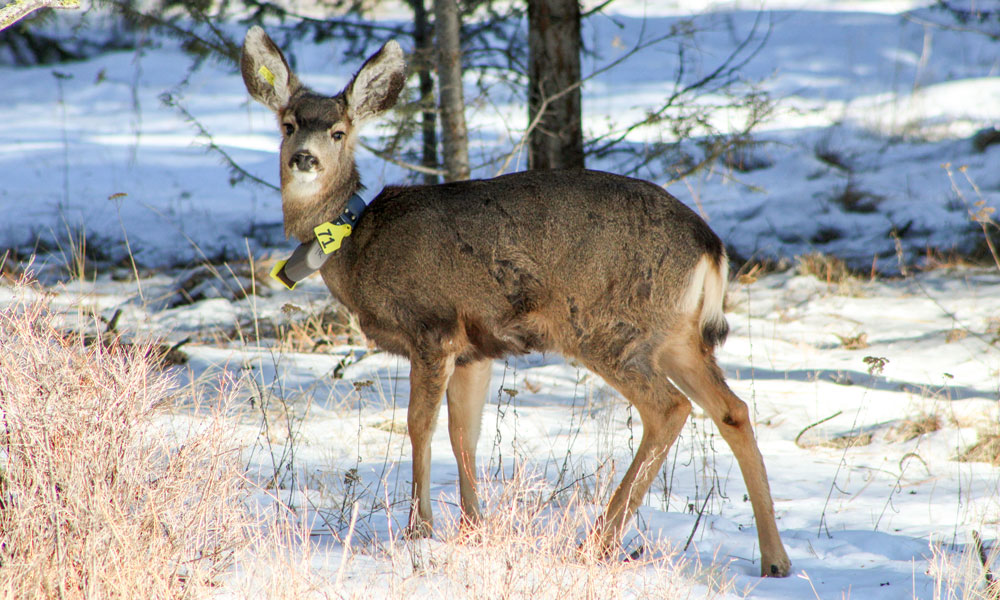
The project itself consisted of collaring mule deer does and setting camera traps in the woods to find out who was around. Our club, North Shore Fish and Game, provided funds for one of the collars. Over the years lessons were learned and fawns were added to the collaring program.
But one of the coolest characteristics of the study was that the data would be shared with a network of universities and wildlife bios across western North America. This commitment to sharing data came with the benefit that scientists at UBCO would, in turn, be given access to data that the other scientists at other universities were collecting. The synergies are amazing.
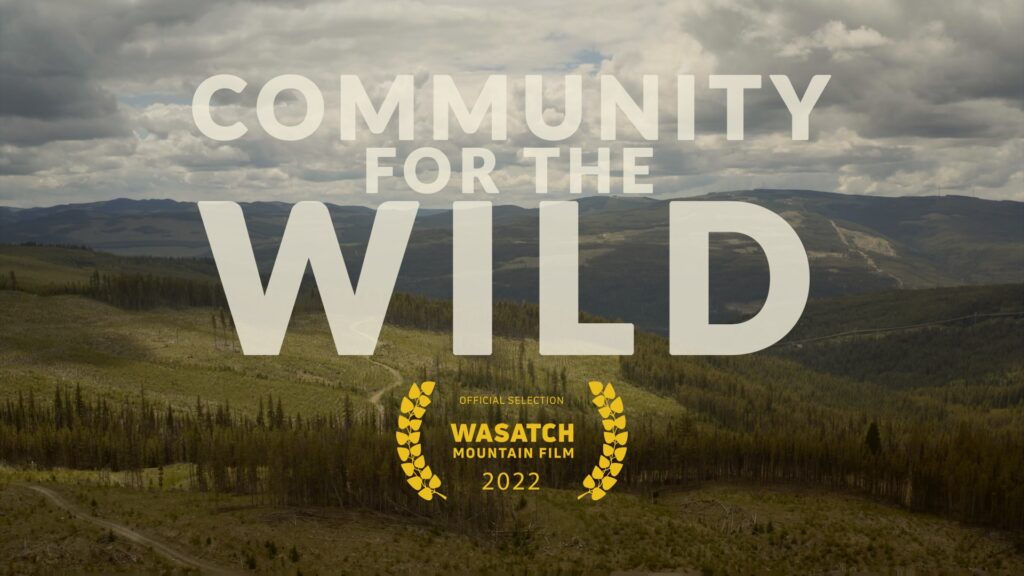
BCWF has done multiple webinars on SIMDeer, and there have been multiple podcasts done on it as well, but a partnership with Telus led to a great documentary entitled “Community for the Wild” that ran on Telus TV for an extended period of time before moving to YouTube.
As a result of the Yahey decision the BC government has proposed some very poor solutions to the problem of industrial activity in Treaty 8 lands. They have abandoned the work done by Together for Wildlife, are ignoring previous policy, abandoning science and proposing a solution that Blueberry River First Nation did not ask for.
The Blueberry River First Nation is a Treaty 8 signatory. They have a treaty right to practice their way of life;
A chief of the BRFN took the province to court, arguing that the cumulative impacts of industrial activity in BRFN traditional territory amounted to a breach of Treaty 8 ;
The court found in favour of BRFN and ordered the province to negotiate a settlement in regard to the cumulative effects of industrial activity ;
The province declined to appeal the decision and entered negotiations ;
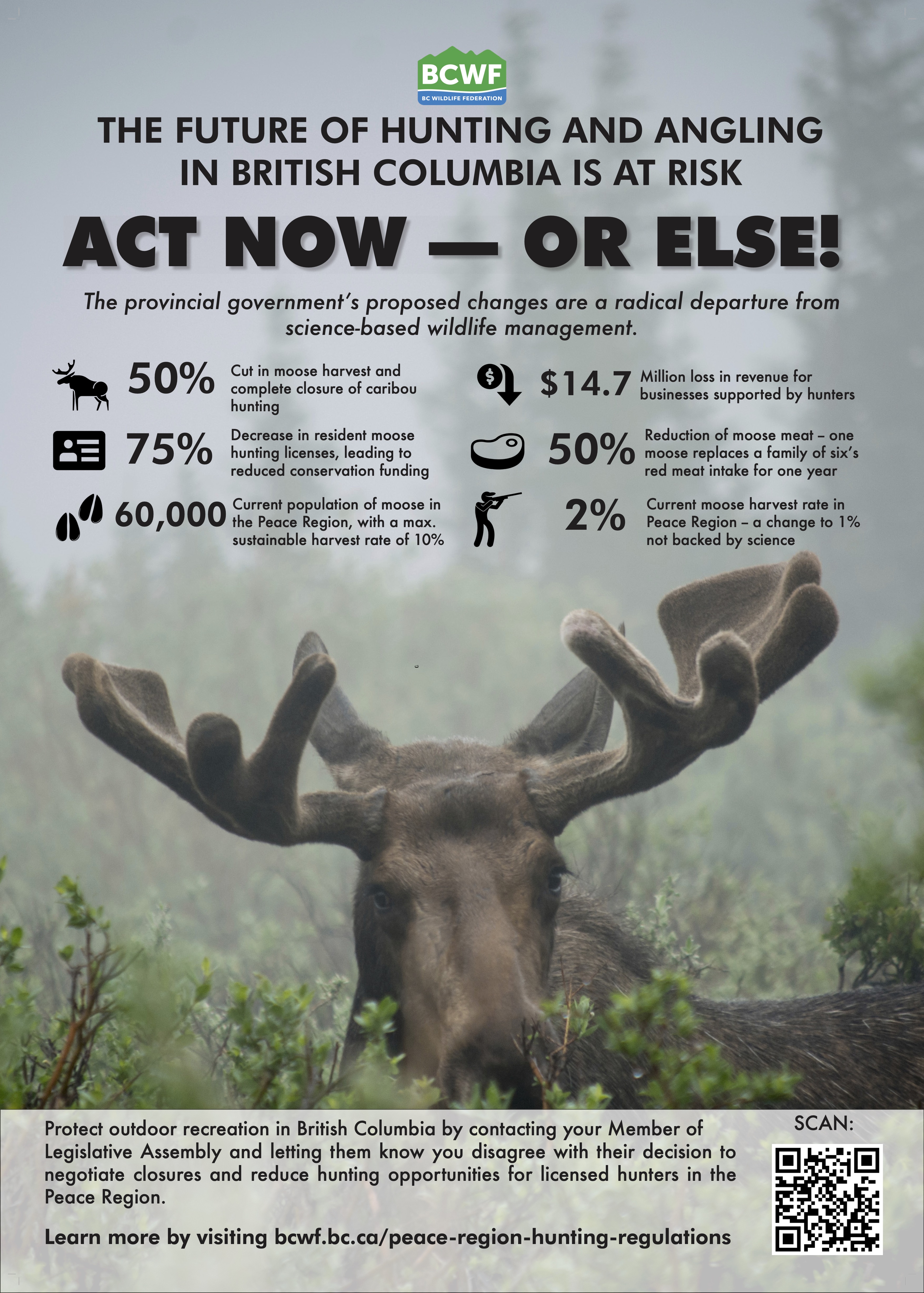
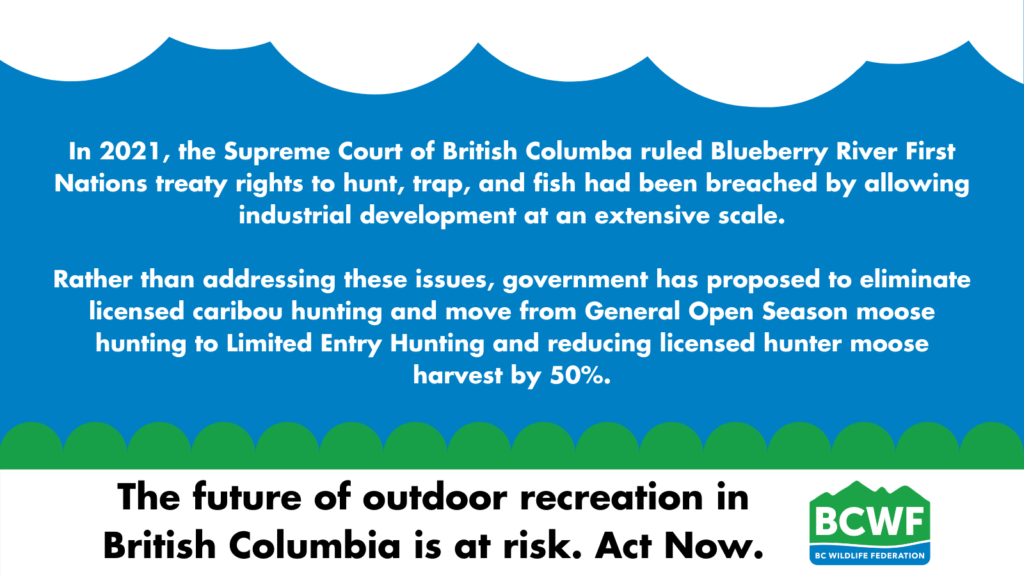
In response to the cumulative effects of industrial activity the province has proposed the suspension of the sustainable hunting of caribou across 7B (not of endangered herds, but of all herds) and reduction of residential moose harvest by 50% along with a change to LEH for moose ;
This proposal is not science based – the harvest of both species is more than sustainable ;
This proposal does not follow the province’s own guidelines and is in conflict with the goals expressed in the Together for Wildlife process that First nations, government and stakeholders spent the last 2 years pursuing;
It is not clear that all Treaty 8 First Nations even asked for this solution;
This is a terrible proposal that damages caribou restoration, hurts the economy, punishes resident hunters and throws the process of truth and reconciliation into reverse ;
If you care about outdoor recreation, fish, wildlife and habitat you should vigorously oppose this proposal.
At the bottom of this page we’ll show you how to do that.
BCWF recently circulated the following op-ed:
The provincial government has floated a proposal that puts at risk the rights of all British Columbians to enjoy the outdoors in exchange for continued industrial exploitation of the Peace-Liard region, which makes up nearly 22% of the province of British Columba.
Do you value your right to hike, camp, fish and enjoy a pristine environment? Well, hang on.
The Supreme Court of British Columbia ruled late last year that the Blueberry Nation’s treaty rights to hunt, trap and fish in their territory have been breached “by allowing industrial development in Blueberry’s territory at an extensive scale.”
As part of this proposal, the moose harvest will be cut by 50 per cent and caribou hunting closed across the region, while 195 gas, oil and forestry projects will continue, with 20 more up for negotiation.
Maybe you aren’t a hunter. Maybe the Peace-Liard sounds like it’s awfully far away and maybe it is. But here’s why you should care.
When access to the backcountry and the natural assets of this great province become bargaining chips to be dealt away for industrial development, we all lose. And the environment will lose, too.
Is this the model of the future, where the provincial government approves unsustainable resource extraction and squares the equation on the backs of British Columbians who are simply looking to connect with nature?
The BCWF is concerned that this is the tip of the iceberg and that these kinds of deals are coming to parks, campsites, streams and lakes in British Columbia.;
If you’re a hiker, camper, hunter, angler or snowmobiler you should be concerned about the precedent this proposal sets. The government seems happy to trade away your connection to nature in favour of continued industrial encroachment.
There is a great deal to like about the Blueberry deal. The government committed $65 million for land restoration and related projects in an area that is riddled with logging, gas wells, and access roads, all of which are a threat to wildlife.
It’s an important step toward reconciliation. The BC Wildlife Federation fully supports the rights of First Nations to hunt and fish in their traditional territories for food, social and ceremonial purposes and our commitment to conservation and habitat restoration is shared between First Nations and non-First Nations.
But we must all be able to share our outdoors spaces, together.
According to the court ruling that triggered the deal, the cumulative effects of oil and gas, forestry, mining, hydroelectric infrastructure, and agricultural clearing “has resulted in significant adverse impacts on the meaningful exercise of their treaty rights, and that amount to a breach of the Treaty.”
More than 84 per cent of Blueberry River territory is within 500 metres of industrial activity, which marginalizes their treaty rights to hunt, fish, and trap.
This proposal does nothing to mitigate those impacts nor does it provide support for on-the-ground actions that benefit wildlife and habitat in Treaty 8 territory.
Instead of addressing real concerns about environmental degradation that all First Nations and non-First Nations people share, this approach ensures continued industrial expansion.
Worse, by trading away the rights of British Columbians, the government has created a template for similar deals across the province.
Are you prepared to lose access to your favourite hiking paths, fishing streams, BC parks, campsites and snowmobile trails? That dark future may already be here.
The BCWF advocates for conservation on behalf of more than 43,000 member British Columbians.
Meet in person or by Zoom with your MLA (it’s their job to meet with you and it’s not as hard or scary as you might think).
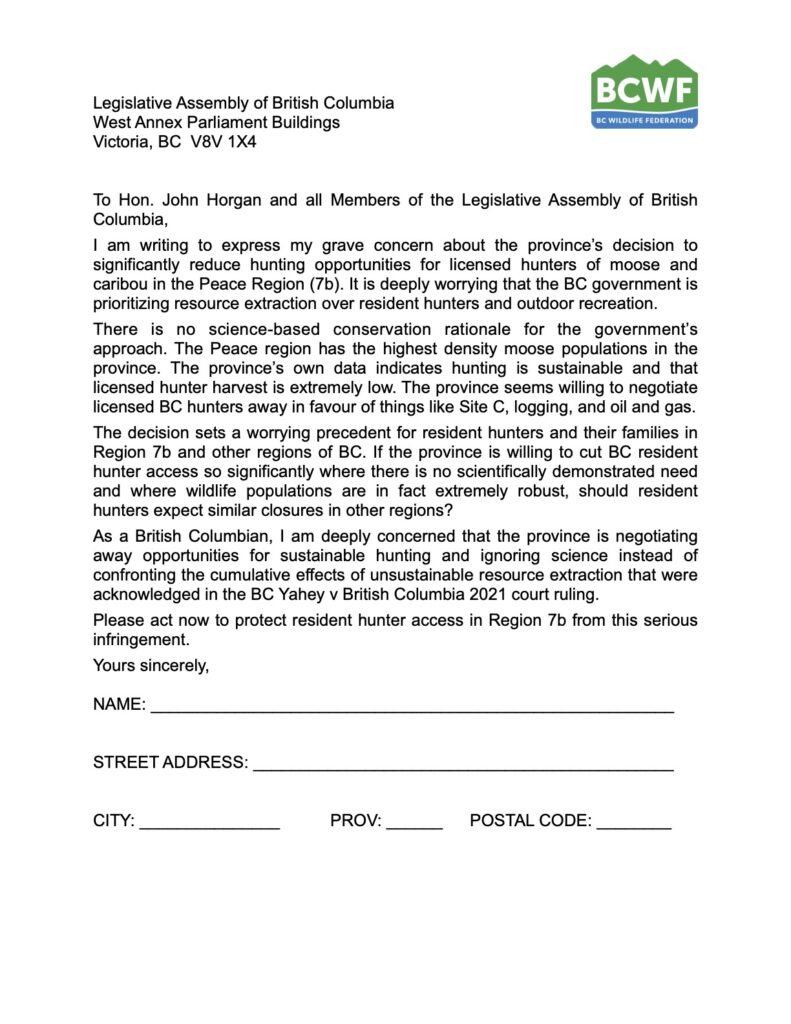
Go to BCWF’s website here, scroll to the bottom and send a form letter to your MLA.
Go to the province’s Angling, hunting and trapping engagement site (AHTE) and leave a comment. You will need to have or will need to get a BCeID number. Click on “Login” to do either (you can get a basic BCeID from the Login page). Once you’re logged in you can vote to oppose the changes and leave a comment.
Go to Howl For Wildlife and follow the directions. Howl For Wildlife is a continent wide advocacy platform that sends your message to all 86 MLAs.
Get on social media and like and share Twitter, Facebook and Instagram posts highlighting this issue.
At a minimum do one of these things, but better yet, do them all and then go even further. This isn’t just about preserving resident hunting in the Peace. It’s about managing fish, wildlife and habitat throughout the province in a sustainable way, informed by science and Indigenous knowledge, and it’s also about advancing reconciliation. Blueberry River isn’t the bad guy here. They didn’t breach the treaty – the government did, and now the same government is trying to make a quick deal rather than solve the problem they created.
If we let the government get away with this they will repeat the tactic throughout the province.
It is CRITICAL that you fill out the AHTE survey. IT IS IMPORTANT TO NOTE THAT THE GOVERNMENT HAS PASSED A PROPOSAL TO HARMONIZE SEASONS IN REGIONS 7A/B AND 6, SO IF THIS PASSES, HALF OF THE PROVINCE IS AFFECTED IMMEDIATELY.
Login to the AHTE website and let your voice be heard! We have until MARCH 23
2. Login if you have a BCeID (this is the same as your hunting login) if you don’t have one you can register here. (Non residents and non hunters are allowed to comment as well )