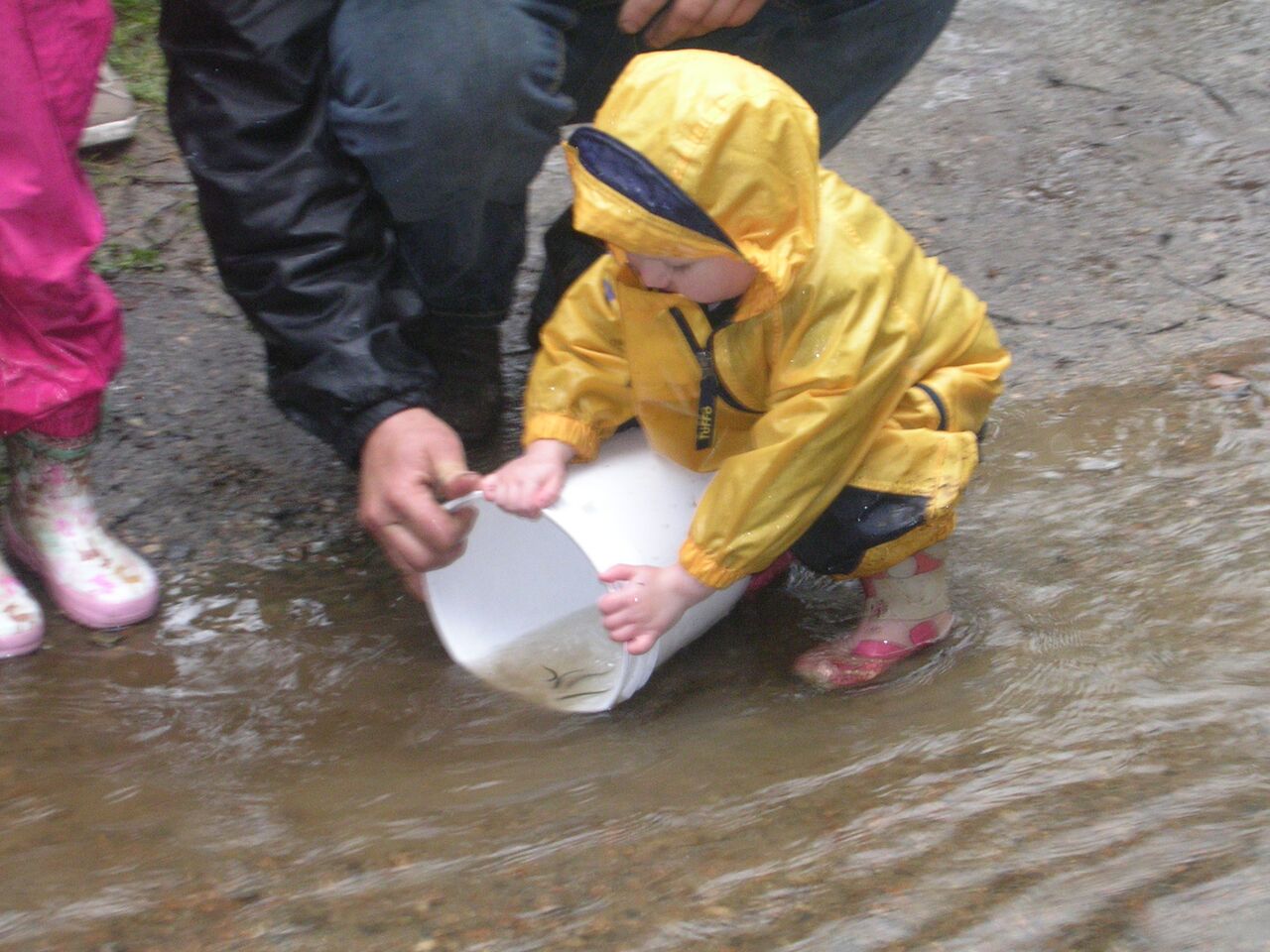
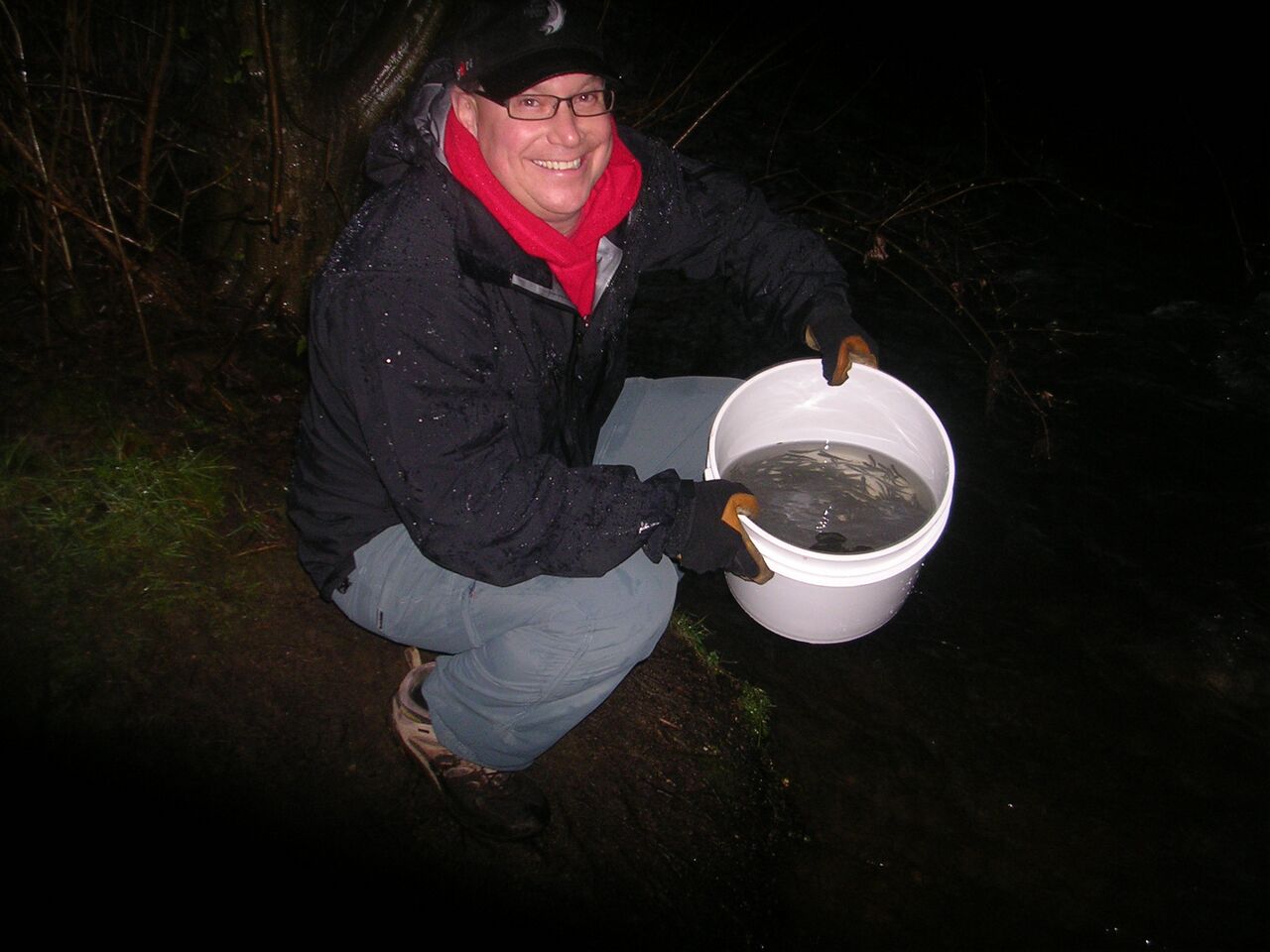
The North Shore Fish and Game annual fry releases coming up. These are lots of fun for kids, and are very educational.
The first is the North Shore Fish & Game Club hatchery release on March 31, 6:00-8:00, at the hatchery at Heywood Park. You can contact Brian Comey for more info.
We will be meeting at Wildeye Brewery, Monday, March 9, at 7:00. Wildeye was the site of the recent townhall, is owned by one of our club members and is located at 1385 Main Street, North Van.
There is free parking along the west side of the building. We will grab a couple tables and start soon after 7:00. The Directors have some good news to report in terms of plans for 2026 as well as some club acquisitions, so make sure you come out. Once club business is concluded we’ll relax, socialize and have a few beers, cocktails or libations of your choice!
The members of the North Shore Fish and Game Club are deeply saddened by the passing of two long time club members, Allan Milligan and Manfred Krettek.
Allan Milligan
Allan was one of the early members of the North Shore Fish and Game Club, joining soon after the Club’s founding, serving as President in 1970-71. Beyond his involvement with the Club, Allan also served as Trails Manager at Maplewood Flats. In recognition of his exceptional service to the community, Allan received a Special Recognition Award from North Shore Community Services.
On behalf of all members, past and present, we extend our deepest condolences to his family, including Laurie, his son and NSF&G club member. He will be greatly missed and fondly remembered.
Manfred Krettek
Manfred came to Canada in the early 70s from Czechoslovakia, settling first in Toronto and later in Vancouver. He was a furniture maker by trade, an ardent fisherman (both salt and freshwater) a great chef, bread maker and accomplished artist. His friends were shocked by his sudden passing.
Manfred leaves behind his loving wife, Olga, as well as a daughter, Christine. He had many friends in the club and will be missed. Unfortunately I could not find a picture of Manfred but the picture below is an example of his artwork, courtesy of Derek and Linda Hardy.
We will be sharing a booth with BCWF at the BC Outdoors Show – Chilliwack Heritage Park. Hours are 10:00-6:00 on Friday and Saturday, and 10:00-4:00 on Sunday. We need volunteers to man the booth and drive membership! Volunteers get free entry. Otherwise tickets start at $12.00 (kids under 11 are free, seniors are $9.00). The show’s website with more info is here: https://www.bcoutdoorsshow.com
BCWF will be holding 6 SAP town halls across the Lower Mainland.
Chilliwack – February 17, 2026
Pitt Meadows – February 18, 2026
Mission – February 19, 2026
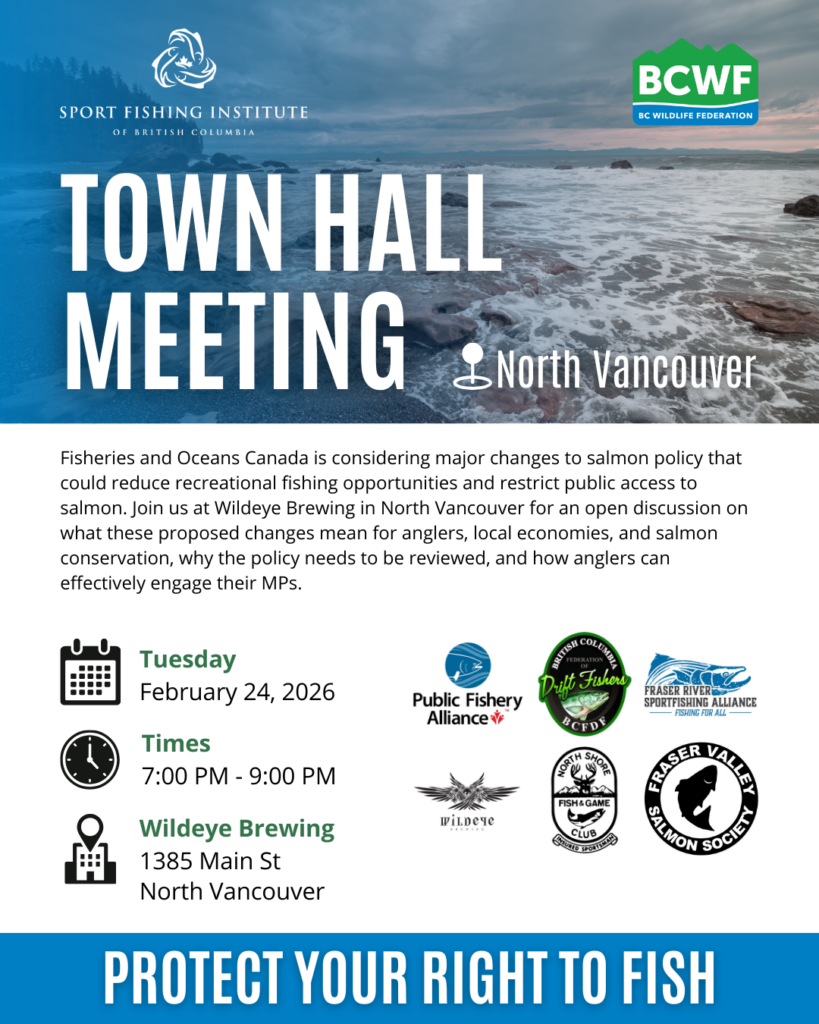
North Vancouver – February 24, 2026
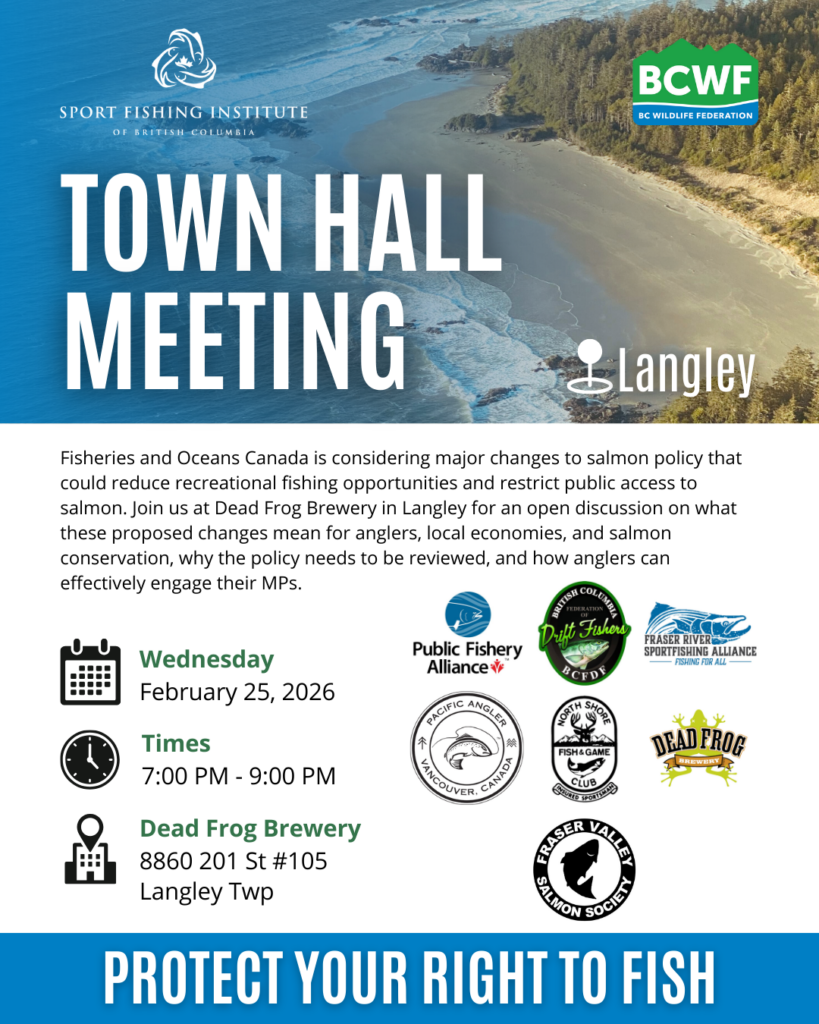
Langley – February 25, 2026
Coquitlam – February 26, 2026
NSF&G are involved in promoting and organizing the North Van event, at Wildeye Brewing, and the Langley event, at Dead Frog Brewery.
Fisheries and Oceans Canada is proposing significant changes to the Salmon Allocation Policy that could reduce public access to salmon and impact recreational fishing opportunities across British Columbia. These community town halls are your chance to hear what’s being proposed, understand how it could affect anglers, local economies, and conservation, and learn how to take action.
One of the two changes being considered by Fisheries and Oceans Canada (DFO) is the elimination of the principle that salmon are a public resource to be managed for the benefit of all Canadians in its new Salmon Allocation Policy.
First Nations are asking DFO to eliminate this principle from the policy that will guide allocation of salmon among First Nations Food, Ceremonial and Social fisheries, First Nations treaty-based fisheries, non-Indigenous recreational fishers, and commercial fisheries.
The changes proposed are a radical shift in the principles that govern conservation and access to public resources, removing existing public fishing opportunities, and curtailing public access to salmon.
This past fall many NSF&G members travelled to the east Kootenays to hunt whitetails and many of us were very successful (thanks to all the club members who helped make that happen for other club members!)
Some of the success took place in the Kootenay’s CWD hotspot, close to Cranbrook, so CWD, a disease occurring far from North Van, is directly linked to freezers in North Van.
Here’s why.
Chronic wasting disease (CWD) is a fatal, infectious disease that affects the nervous system of deer, elk, moose, and caribou. It’s caused by abnormal proteins called prions that build up in the brain and other tissues. The symptoms are weight loss, poor coordination, excessive salivation (drooling), lethargy, stumbling, and trembling. People who have seen CWD infected deer often describe them as being like zombies.
What the Heck is a “prion”? A prion is a misfiled protein that then induces more misfiling in normal variants of the same protein. They start with a normal protein mutating onto a prion, and then, after mutation, causing other proteins to misfold, and that misfolding leads to cellular death.
Prions are responsible for prion diseases, known as “transmissible spongiform encephalopathy” (TSE) affecting both humans and animals. We know the names – CWD for TSEs in deer, mad cow disease when it happens in cows, scrapie when it’s found in sheep, and Kreutzfeld-Jacob disease when it occurs in humans.
(Click on the image to go to the Mayo Clinic for more information).
CWD spreads through saliva, urine, and other bodily fluids and other deer become infected through direct contact with an infected animal, its feces or by consuming contaminated food or water.
It’s tough to kill the CWD prion. To destroy it requires sustained heat for several hours at extremely high temperatures (900°F and above). In other words? Once it’s in the environment we are not destroying it. Prions can survive in the environment for many years
It gets worse. There is no known cure for CWD. If a deer or other ungulate gets it that animal will die, and before it dies it will spread the prions and other deer will die, but not before they spread the prions even further.
Where Did It Come From? The exact origin is unknown but i was first noticed in 1967 in captive mule deer at a US government research facility in Colorado that had previously held domestic sheep. The suspicion is that scrapie prions mutated into CWD prions. It wasn’t identified as a transmissible spongiform encephalopathy (TSE) until the 1970s and was first found in the wild in Colorado in 1981 in elk.
CWD made it to captive herds in Saskatchewan in the mid-1990s, to wild cervids in Saskatchewan by 2000, and it has now turned up in 5 provinces (Quebec, Manitoba, Saskatchewan, Alberta and BC). It also occurs in Arkansas, Colorado, Illinois, Iowa, Kansas, Maryland, Michigan, Minnesota, Missouri, Montana, Nebraska, New Mexico, New York, North Dakota, Ohio, Oklahoma, Pennsylvania, South Dakota, Texas, Utah, Virginia, Wisconsin, West Virginia, and Wyoming.
CWD has also been found in reindeer and moose in the United States, as well as in Canada, Norway, Finland, and Sweden.
CWD infected deer are obviously sick once the infection has progressed, as the photo above shows, but not all CWD infected deer are that far along, so testing is vital before consumption.
Are CWD Infected Animals Safe to Eat?
There has been no known transmission of CWD to humans, but experts continue to study the possibility of cross-species transmission. Recall the to the best of our knowledge the CWD prion mutated from scrapie, a disease that affects sheep, a completely different species than deer or other cervids.
On the other hand, although CWD has been detected in predators’ feces, demonstrating that predators kill and eat CWD infected deer, there is no evidence that predators have actually been infected by CWD.
It’s probably safe, therefore, for humans to eat CWD infected deer, but……
What is BC Doing About CWD?
The first thing BC has done, (with help from the BCWF, which NSF&G is a proud member of) is declare a CWD “hot zone”.
The BCWF (of which we are a proud member) contributed to the organization and supply of freezers to drop off locations to collect heads for CWD testing. All of the NSF&G club members who hunted these Must last year went through the head drop off process, and some even ran into Cait Nelson, Wildlife Health Biologist at the Ministry of Forests and the person in charge of BC’s CWD response. There is lots of information from the Provincial government on how to handle CWD deer here.
So far the testing program has come up with 5 CWD positives, all in the Kootenay hotzone. A 200 deer cull is currently underway around Cranbrook and Kimberly. The goal is not so much to eradicate the deer population but to get a useful sample size in the areas that are CWD hot spots to determine the infection rate. The government also says it will help reduce population density, but that’s going to take a lot more work and is still to come.
It’s worth remembering that not all of these deer are the typical urban or “town deer” that we sometimes imagine. Most are deer from the large agricultural zones that are close to town. They have few predators, little hunting pressure and lots of food. Lots of deer close together leads to more infection, but those herds also send out young males who will then spread the infection.
I (Rob Chipman) and a BCWF representative on the Provincial Hunting and Trapping Advisory Table (PHTAT) . PHTAT is a group of stakeholders that meets with government on a regular basis, and our next meeting is at the end of this month. CWD will be coming up (as will proposed updates for LEH).
I was recently chatting with a buddy of mine and we discussed a presentation made by NSF&G club member Dr. Ken Ashley at the 2024 BCWF AGM where he talked about the effect of climate change on small lakes and what that means to anglers. My pal mentioned that he was seeing a lot of green matter in lakes that he fished and I suggested that it might be a result not only of climate change, but also logging contributing to higher water temperatures that throw lakes out of balance and make it much tougher on fish.
Now, full disclosure: neither my buddy nor I are smart, well informed people, but my friend didn’t think there was much logging in the Chilcotin, and that if there was a lot of it was probably salvage logging.
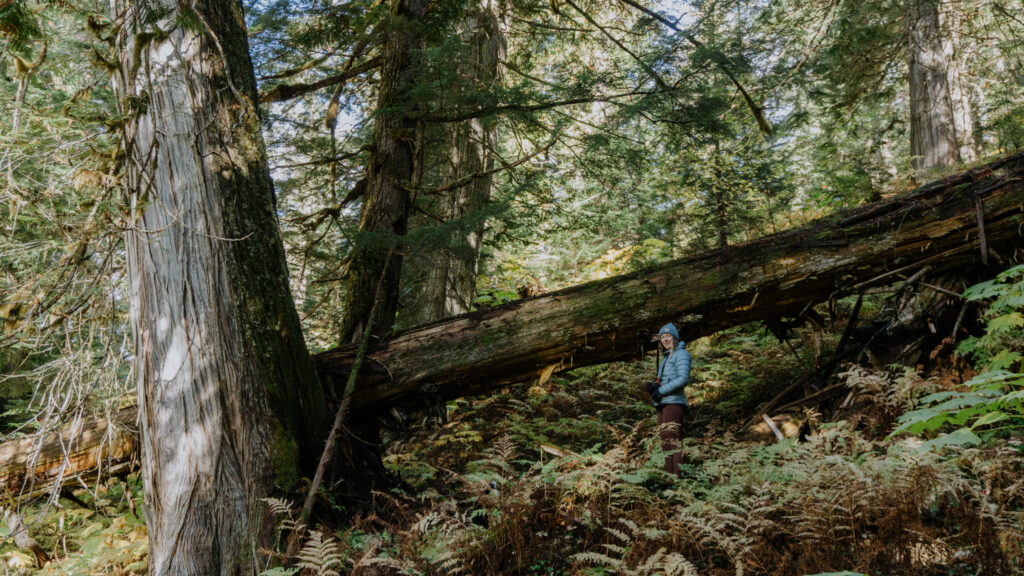
As we all know, salvage logging is something we have to do, right? I mean, we can’t just leave those beetle or fire killed trees standing and going to waste, can we?
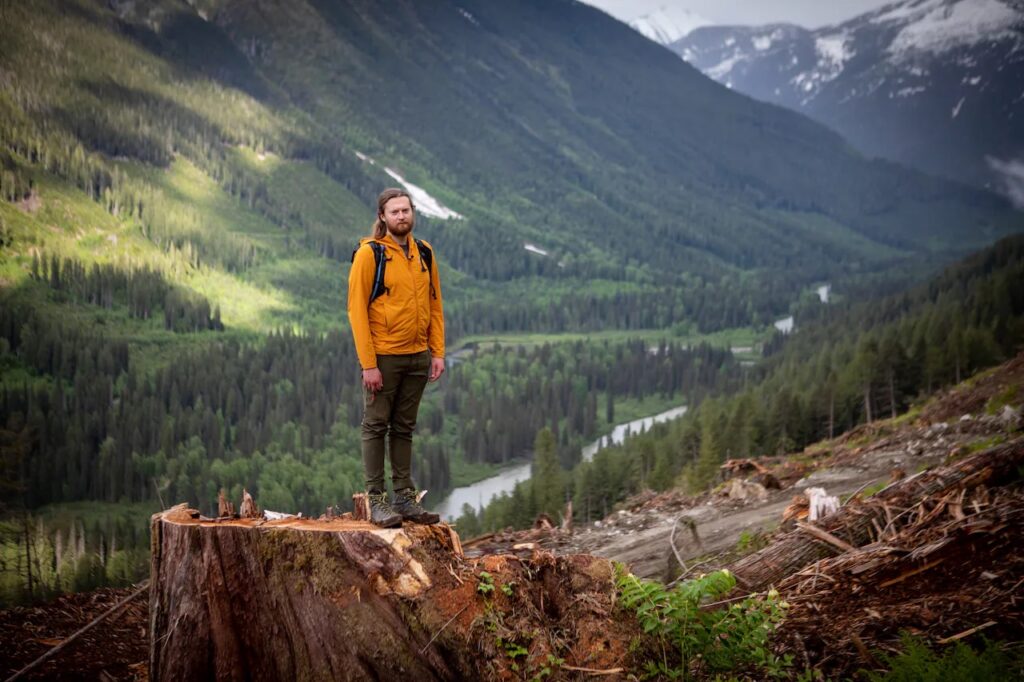
Eddie Petryshen has a different opinion. I know Eddie from X, but in the real world Eddie is a conservation specialist who works with Wildsight in the Kootenays. You can find him on Wildsight’s webpage here and on X here.
Eddie Petreshyn putting stump size in perspective
Eddie works to improve logging practices on the ground and at a provincial level as well as on old growth protection, caribou recovery, recreation and land-use planning. He’s an East Kootenay local yokel, a conservationist and a human and coffee powered adventurer fighting for the land, water, and critters.
What follows is one of his recent X threads, reprinted with his kind permission:
SALVAGE LOGGING IN BC
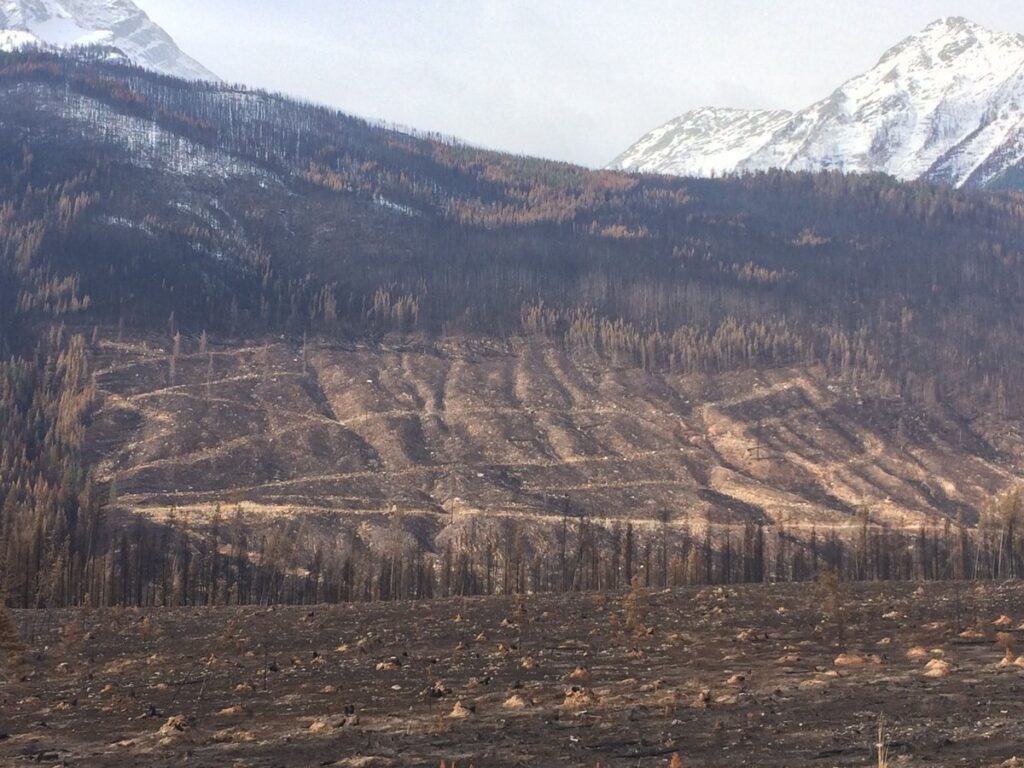
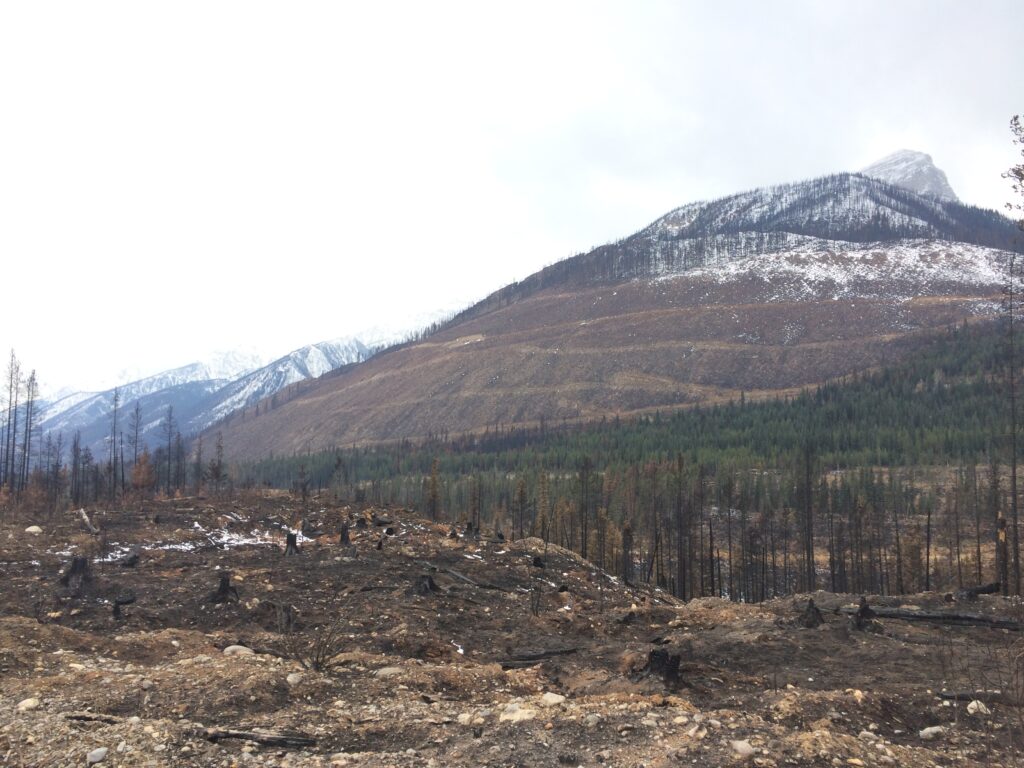
The climate is changing rapidly here in BC. As climate chaos continues to become more extreme we will see more fires and more forest disturbance from insects like bark beetles. But let’s talk about what happens after fire or beetles. Let’s talk about salvage logging.
The
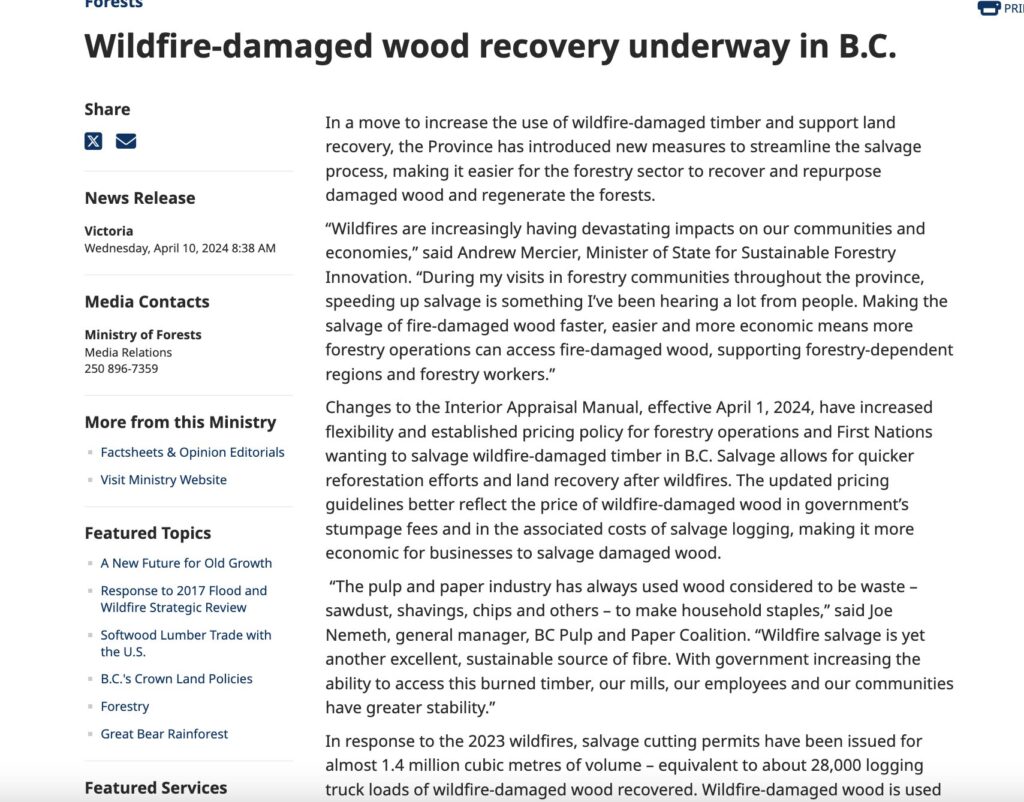
@bcndp recently further incentivized and prioritized industrial salvage logging. So what’s the problem and issue?
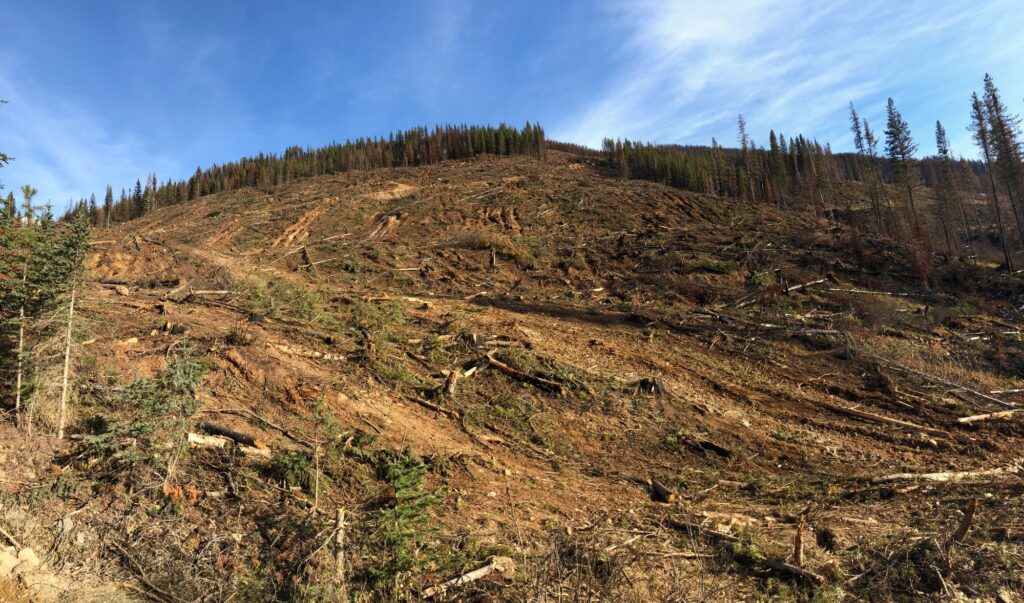
Salvage logging is logging that takes place after a natural disturbance.
This logging is heavily subsidised as logging companies will pay low stumpage rates for the trees logged. The province incentives logging as companies are on the hook for reforestation and the province wants to maximise getting burnt timber to mills + pellet + pulp operations.
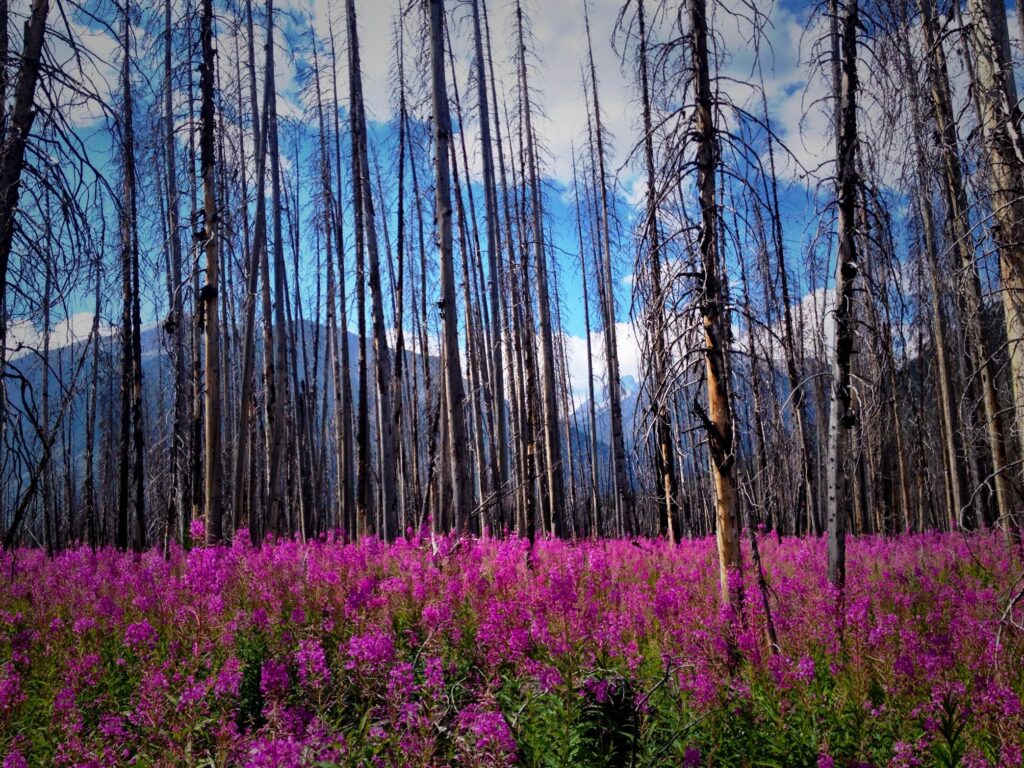
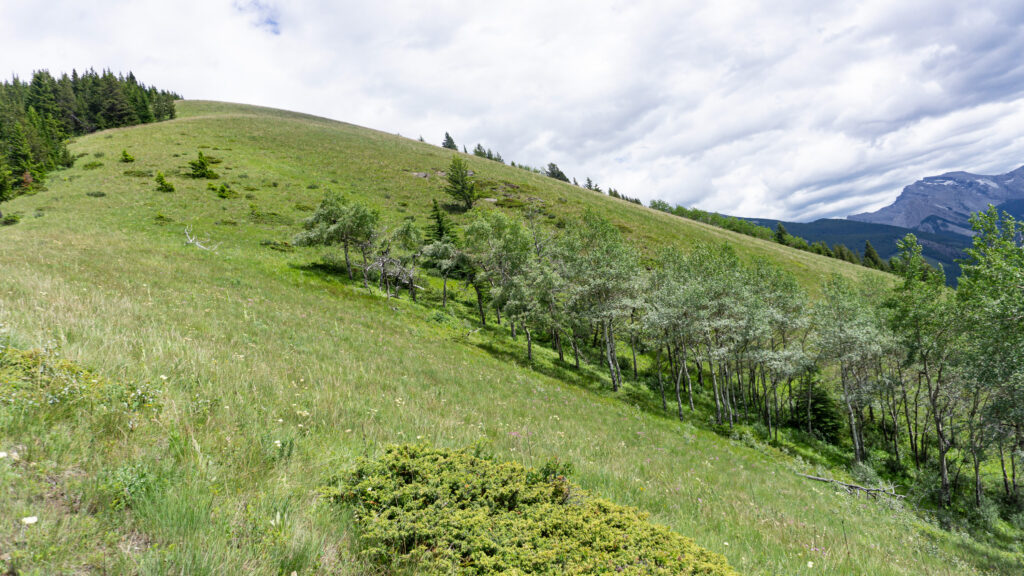
BC’s ecosystems evolved with disturbance. Our remaining primary forests are a result of the complex natural + diverse disturbance regimes. From wet ancient stands that evaded fire or large disturbance for 1000s of years to open forests and grasslands that burned every 3-5 years.
It’s important to acknowledge natural disturbance is about survivors, it’s about a legacy of living organisms and dead materials. It’s about variability even in severe burns. I think the concept of complex early seral forests is an important piece of the puzzle.
Naturally disturbed forests provide complex early seral environments with more species, complexity, snags, greater biological legacies and unique understory vegetation. Salvaging removes that habitat complexity, which is not recovered with replanting.
There is a growing body of evidence that salvage logging interferes with natural ecological recovery (see the linked paper here).
The authors of that report ^ describe salvage logging as a tax on natural ecological recovery.
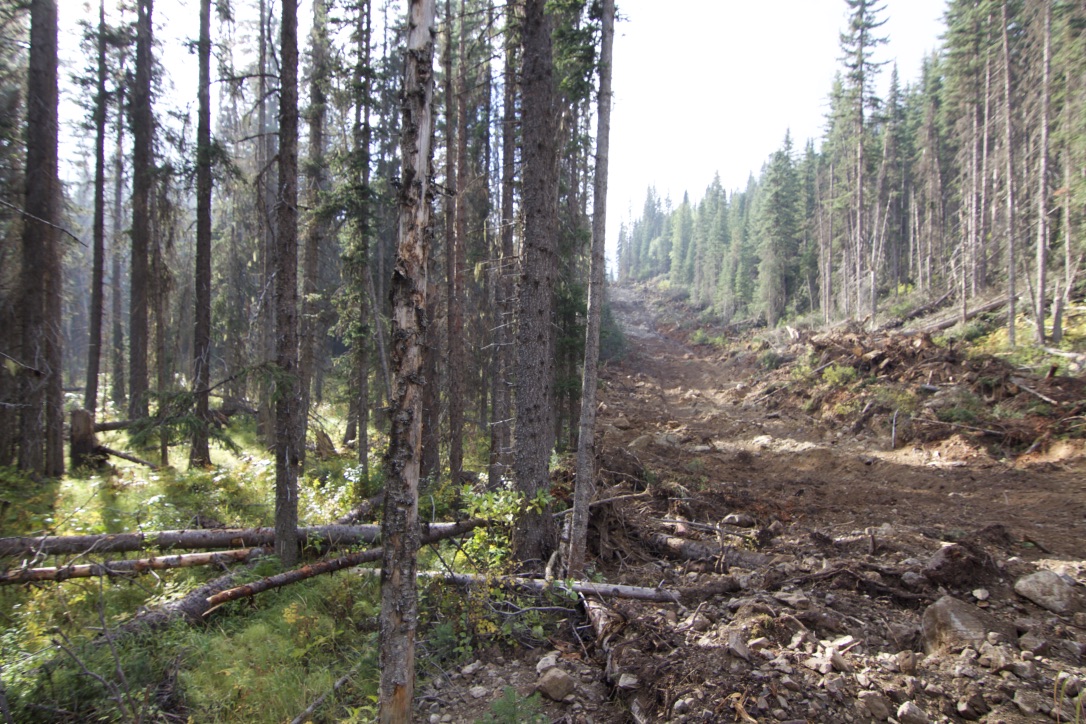
Salvage logging can degrade the soil’s ability to retain moisture and regulate temperature, which limits regrowth and encourages erosion, sedimentation and even landslides. The impact on fish-bearing streams can be catastrophic.
It’s a question about how we want to treat water. This study quantifies just how much we impact water quality by salvage logging. “For all parameters evaluated, salvage-logged catchments were more heavily impacted than either burnt or unburnt catchments” (paper here)
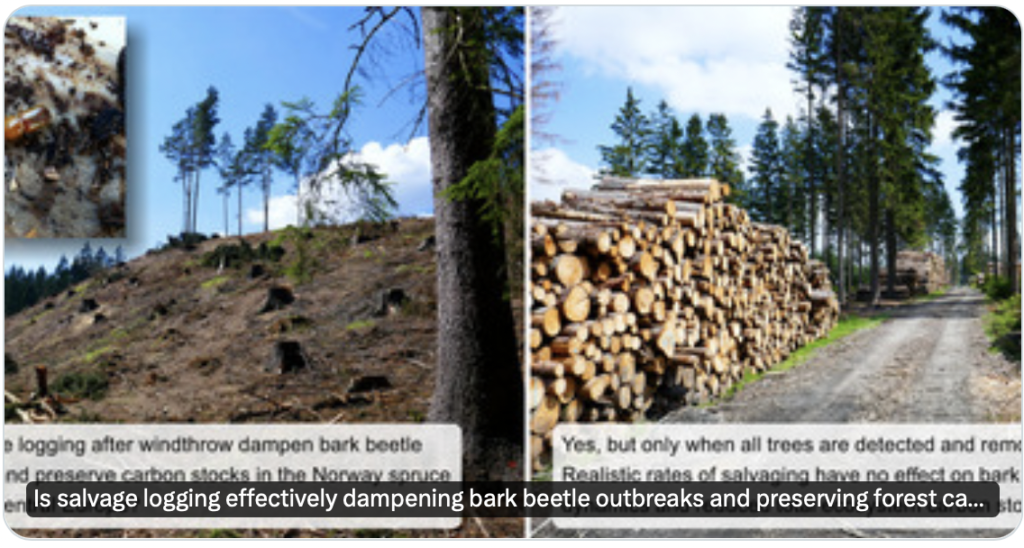
Finally, is salvage logging an effective strategy to mitigate endemic bark beetles outbreaks?
Increasingly we’re realising that burnt forests and the ecosystems they produce while they recover are incredibly important. If ecosystem resilience is the priority we should let these forests recover on their own for the most part.
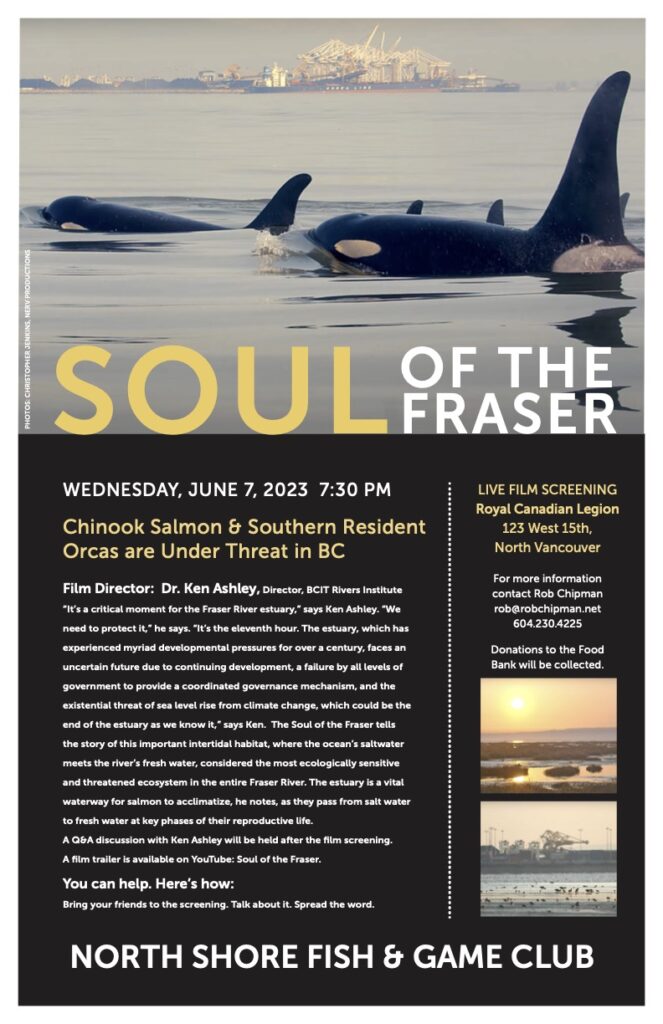
We will be screening “Soul of the Fraser”, the companion documentary to “Heart of the Fraser”, June 7 at the Royal Canadian Legion in North Vancouver (123 West 15th, just west of 15th and Lonsdale).
Admission is free. Executive producer and club member Ken Ashely will conduct a Q&A.
Weekend Warrior: Function Point’s Jenny Ly is a software sales exec, hunter and conservationist all at once
Credit: Tanya Goehring
Three large animals later, Ly is on the hunt for deer
Imagine winning a Limited Entry Hunting draw that allows you to go shoot a caribou in B.C.’s Itcha mountain range. That would mean driving 10 hours from Vancouver, jumping on a Beaver float plane and getting dropped off in the middle of nowhere for 10 days.
“It was pretty extreme for a new hunter,” says Jenny Ly, account executive at Vancouver-based software firm Function Point, of her first hunt. It was 2018, and the 25-year-old had just quit her job, ended a six-year relationship and moved out on her own for the first time.
Looking for a fresh start, Ly began foraging for mushrooms. She took two exams, and learned gun safety, hunting safety, backpacking skills and backcountry survival. She also worked at a restaurant, where she met hunters of different calibres. “It all spiralled from there,” she remembers.
No matter how big your passion is, taking on a caribou on your first hunt is no easy task. After the experience—in which Ly heard her partner make the kill—it took several trips (and days) for the pair to skin, butcher and hike the animal to the pick-up point. But by the time they reached the lake, the snow had them trapped for three days before a plane could get them.
What Ly does is called mountain hunting: “Just imagine you’re going on a five- to 10-day backpacking trip in the mountains,” she says. She carries everything on her back: a light tent, sleeping bag, mini stove, freeze-dried food, water, trekking poles and boots. “The only difference from a backpacker is my rifle,” she adds.
As you can probably tell from the gear involved, hunting can really gut your wallet. But even after five years at Function Point, Ly has declined promotions so that she can maintain her current work-life balance, which enables her to devote just as much time as she works into volunteering as a board member of the BC Wildlife Federation (which includes 40,000 local members, most of whom are hunters). In her role, she implements DEI policies and digital strategies to help the organization grow sustainably.
“A lot of hunters care about the environment and habitats,” Ly explains. “We donate a lot of our money towards caring for the animals and the rules are very strict in B.C.—if you shoot an animal, you have to eat it.”
Ly is actually vegetarian for most of the year (with a diet of mostly eggs and tofu), except when she eats the meat she kills. Growing up, the Vancouverite often visited her family’s farm in Vietnam, where she regularly saw people butcher pigs, geese and chickens. So when she began hunting and wanted to butcher an animal herself, she did what any of us would do: she looked it up on YouTube.
“If I didn’t have my time out in the woods, I don’t think I’d be that good of a businessperson,” she maintains. “Being able to sit still in minus 12 degrees in snow waiting for an animal has made me a better communicator, a better listener, and it’s given me more compassion for people.” It’s also given her a new perspective on consuming sustainably, Ly adds.
But it’s not always as glorious as it sounds. “I think 90 percent of the time it’s going for a hike with your rifle,” says Ly. To put things into perspective, she has only shot three animals in six years. One of those was a Canadian moose—her biggest kill yet.
That hunt was during mating season, so the animals were, shall we say, a bit distracted. To attract one, Ly mimicked the mating call of a female moose: “Believe it or not, the moose are horny, and they run out, and that’s your opportunity to shoot,” she says.
Her favourite trip was a solo hunt for a mountain goat in 2019, when the conservationist found herself separated from her own herd in Smithers. Shooting female goats, while legal, is discouraged, which means Ly (still a rookie at this point) spent three long nights being circled by grizzlies and wolves, waiting for a goat to lift its leg.
“Finally, it took a piss and I made the shot right away,” she recalls of the almost 300-pound male she had to carry back home.
At the moment, she’s got her eyes on deer, which are a quick and difficult animal to hunt. In fact, she just returned from a five-day trip to Clinton, where she was tracking deer knee deep in snow.
When asked what she came back with, she starts to laugh: “Just a good spirit. That’s the reality of hunting.”
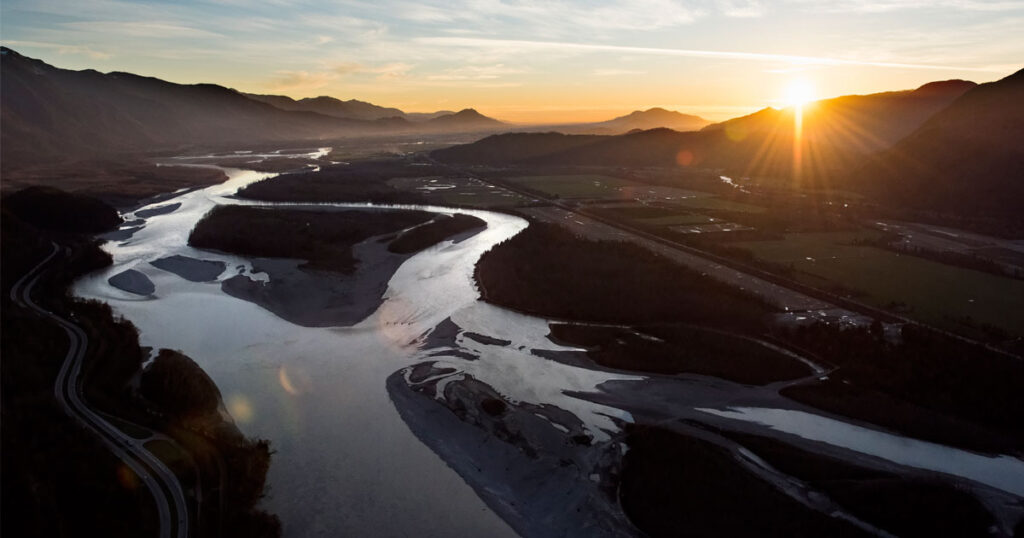
The area known as the Heart of the Fraser stretches from Hope to Mission. Its where the river hits the coast and starts to slow down, and as it does it deposits gravel that’s made its way from as far away as the west slope of the Rockies.
Over thousands of years that gravel has provided fantastic spawning habitat for salmon, but plunking a major metropolitan centre on it for 150 years has done a lot of damage. We need to fix that before it’s gone too far.
On February 1 at 7:30 the North Shore Fish and Game Club will screen the documentary “The Heart of the Fraser” at The Royal Canadian Legion at 15th and Lonsdale. The film-maker, Dr. Ken Ashley, of BCIT’s Rivers Institute, will be there to discuss the issue.
Some people do not truly comprehend the perilous state of salmon in BC. We are not preserving or conserving or restoring them.
We are managing them to zero. If we keep doing what we’re doing we’ll get there and BC will no longer have the salmon that this part of the world is famous for.
Join us, watch the film, have a cold one, and listen to the speakers. After that we’ll tell you how you can get involved and help.