Transporation Routes as a Cause of Wildlife Mortality

Caution: there are some graphic images in this post.

Both highways and railroads can pose a risk to wildlife, especially in areas where there are large populations of animals or where animals are known to migrate. When animals try to cross the road or the tracks, they can be hit by vehicles or trains, which can result in injury or death.

Wildlife can be attracted to the tracks or the sides of highways by forage opportunities like lush vegetation, salt, spilled grain or roadkill. If they are not paying attention or do not understand how cars and trains move they can be hit and either injured or killed.

In addition, the construction of highways and railroads can lead to habitat destruction, which can impact the populations of certain species, especially when the transport routes transect migration corridors, for example, from summer to winter ranges.

It is difficult to quantify the exact number of wildlife deaths caused by highways and railroads each year, as this information is often not systematically recorded or reported. However, it is known that both highways and railroads can pose a significant risk to wildlife, especially in areas where there are large populations of animals or where animals are known to migrate. Mortality on highways his more well known, especially to locals or biologists, but railway mortality is less well known.

When American wildlife bio Bart George spoke with Steve Rinella on the MeatEater podcast in August of 2016 he discussed the trans-boundary mountain caribou herd (that herd has since been completely extirpated) George discussed wolf, cougar and bear predation on caribou, but interestingly said that Highway 3, the Crowsnest, was a significant, if not the biggest, threat to that herd. You can link to that podcast at the MeatEater site and get it on a variety of platforms. Despite being from 2016 its still worth listening too.

Dr. Clayton Lamb, the increasingly famous BC wildlife bio, has long shared information on this issue (you can find him here as well as on Twitter). One of the first presentations I watched him deliver dealt with something he termed “the Trap” – long story short, “the Trap” was a rail corridor that offered grizzlies some great food opportunities, but also killed many inexperienced bars, including sub-adult females that are critical to breeding. That presentation occurred around the time that the NDP banned the grizzly hunt over concerns that the grizzly population in BC was threatened by hunting. Dr. Lamb argued at the time that grizzlies could tolerate the level of hunting that BC allowed prior to the ban, but he also highlighted other serious threats to them (and to other wildlife).

That was several years ago. The hunt is gone, but other significant and largely ignored threats remain. This is from October of this year:

The collar was substantially destroyed by the collision, despite having stood up to months of lining with a grizzly bear. You can also see that a grizzly cub was killed earlier in the year not far from the site where the sub-adult female.

There are several ways that highways and railroads can be made safer for wildlife. One common approach is to install fencing along the sides of the road or tracks to prevent animals from accessing them. This can be especially effective in areas where animals are known to cross the road or tracks regularly. Another option is to build wildlife crossing structures, such as bridges or tunnels, which allow animals to safely pass over or under the road or tracks. These structures can be especially effective in areas where animals are known to migrate. It can also be helpful to work with conservation organizations like BCWF or some of it’s member clubs to identify areas where wildlife is at risk and to develop strategies to protect them.

There are various efforts underway to reduce the impact of highways and railroads on wildlife. For example, many governments and transportation agencies have implemented measures such as fencing along the sides of the road or tracks, wildlife crossing structures, and warning signs to alert animals to the presence of the road or tracks. These efforts can help to reduce the number of wildlife deaths caused by highways and railroads as well as reducing traffic deaths and insurance costs for humans.

Here is another tweet from Dr. Lamb providing more information on overpasses:

Provide Your Input to Freshwater Fishing Regulations Changes

This informations courtesy of Gerry Paille, BCWF director and President of BCWF’s Region 7.

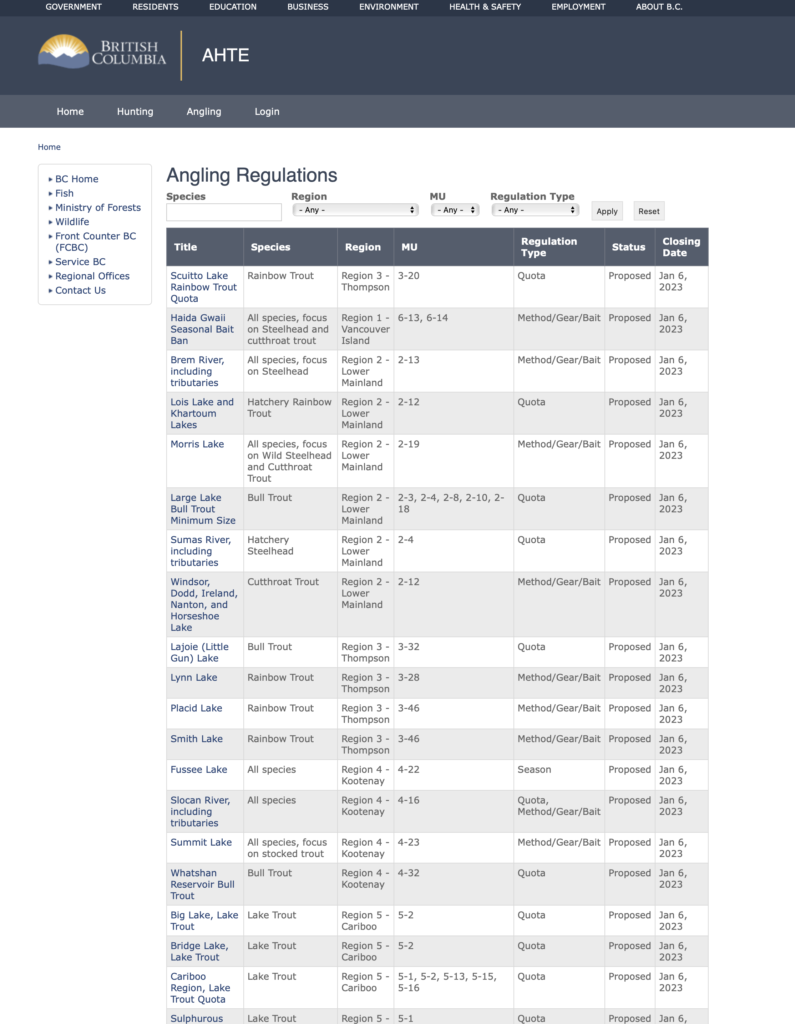
Regional freshwater fishing proposals are now available for comment. Make sure you also provide support if that is the case — we have seen proposals the we generally support not implemented (at least on the hunting reg side of things) because of lack of positive feedback. Deadline for comments is Jan 6, 2023. Login with BCeID is required.

Here is the website for the input: https://apps.nrs.gov.bc.ca/ahte/angling

BCWF provided some instruction on how to use the engagement website for commenting on hunting reg proposals: https://bcwf.bc.ca/engage-now-in-hunting-regulation-proposals-for-2022-2024/

When you get to the government page you click on the blue text (eg “Scuitto Lake Rainbow Trout Quota”) and it will take you to the current and proposed regulations.

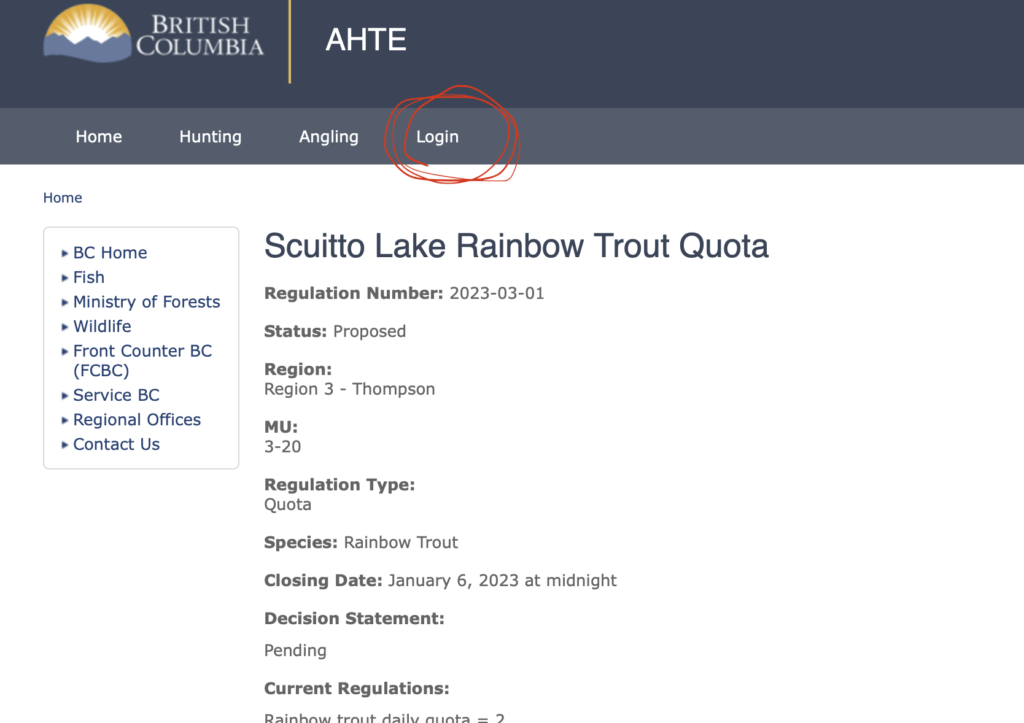
When you get to the regulations page you’ll need to login – see the Login tab that I’ve circled:

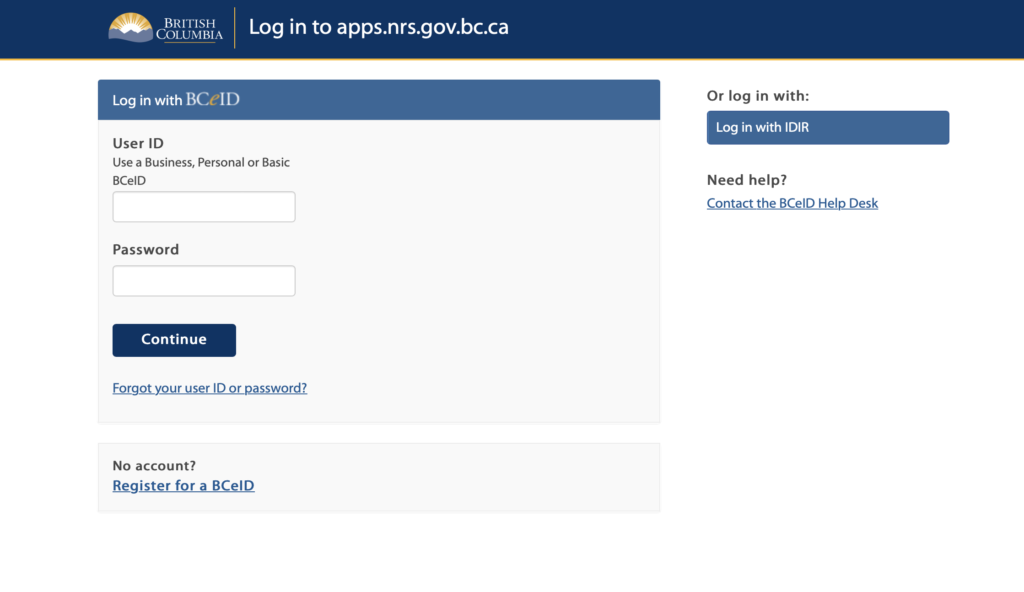
That will take you to the Login page, where you enter your BCeID credentials.

At that point you get kicked back to the regulation page where you can support, be neutral or oppose. Include comments please!

2022 Christmas Potluck

A great time was had by all at the 2022 Christmas Potluck. A great big thank you is due to all who made it come off flawlessly: Andrea, Linda, Nancy Derek, Jim, Joe and many more. A great thanks is also due to the Legion itself for being so welcoming and helpful. It was great to be able to get together for a face to face social occasion. Thanks also to BCWF President Chuck Zuckerman who joined us for the evening.

We also raised $240 as well as food donations for the food bank!

Amendments to Bill C-21

The Federal government has made some poorly thought out amendments to Bill C-21. It appears to be very excessive over-reach that is designed more for political advantage than for public safety. It enjoys little support among law abiding firearms owners.

BCWF has issued a statement on the amendments, copied below:

Canada targets law-abiding Canadians while gang violence sets new records
Amendments to Bill C-21 introduced this week would effectively ban millions of hunting and sporting rifles, in addition to the models already included in the proposed legislation. 
“The federal government is laser-focused on regulating firearms that are rarely used in the commission of crimes and punishing Canadians who are the least likely to commit crimes,” said Jesse Zeman, Executive Director of the 44,000-member B.C. Wildlife Federation.  “Meanwhile, gang violence and gang related murders are the highest on record since Canada started tracking it in 2005.”  
About 74 per cent of gang-related murders are committed with guns, most with a handgun, according to Statistics Canada
“The government knows that gang-related crime is through the roof, but their proposed regulation targets the wrong people and misleads Canadians about the perpetrators of gun crime,” said Zeman. “Gangsters don’t follow the rules, so more rules are not going to address the problem.” 
Bill C-21 was originally introduced by the government to implement a mandatory buyback program for so-called “assault-style” firearms. The original list of affected firearms included more than 2,000 models, the vast majority of which are used for hunting.   
Changes proposed this week expand the definition of a prohibited firearm to include semi-automatic rifles and shotguns “designed to accept a detachable cartridge magazine with a capacity greater than five cartridges of the type for which the firearm was originally designed.” 
The amendments proposed will affect millions of hunting and sporting firearms, according to the Canadian Coalition for Firearms Rights. Those firearms are worth at least $3 billion, including $1 billion worth of inventory in the hands of small businesses across the country. 
Confiscating these lawfully owned firearms will cost Canadians between $1 billion and $5 billion, according to a Fraser Institute study. Plus, it will cost up to $750 million in compensation to legal owners, according to the Parliamentary Budget Office. More than $200 million will be spent to destroy these firearms. 
That’s a big investment for a display that experts agree will have little to no impact on crime. 
“Banning and buying back rifles that are used for hunting and sport shooting will only affect law-abiding, RCMP-vetted Canadians who rely on wild game to feed their families or enjoy a day at the shooting range,” said Zeman. “In contrast, smugglers are literally using drones to fly illegal handguns across the border to gangs, and the federal government is looking the other way because investing in better border security isn’t in their political interests.” 
Licensed owners of firearms are demonstrably less likely to commit a crime than other Canadians. Holders of a Possession and Acquisition License (PAL) are vetted carefully by the RCMP before a license is granted and the list of PAL holders is checked every 24 hours against the identities of people charged with criminal offences.  
The “continuous eligibility screening” program is administered by the RCMP to ensure that the owners of legally obtained firearms are not a threat to public safety.  
The statistics are clear. 
The homicide rate in Canada is 2.12 accused persons per 100,000 adult Canadians. In contrast, between 2000 and 2020, only 1.04 persons were accused of homicide per 100,000 PAL holders, so an adult Canadian who does not hold a PAL is more than twice as likely to be accused of homicide than a PAL holder. In fact, firearms owners are careful to avoid criminal activity because they know that even a minor offense will prevent them from being able to feed their families or enjoy the sport they love. 
The BCWF is urging the federal government to properly fund law enforcement agencies to catch and prosecute people who commit criminal offences with firearms and to bolster the Canadian Border Services Agency to stop the flow of illegal handguns across our borders.  
More than 90 per cent of gun-related crime in Canada is committed with firearms smuggled from the United States.  

Please contact your MP to express your unhappiness with this development. This link will take you to a page that will give you your MPs contact info.

Transmission – A Wild Sheep Society Film on M.Ovi

Many conservationists are aware of the danger of M.Ovi. The full name for this infectious bacteria is Mycoplasma Ovipneumoniae (M.Ovi). It is passed from domestic sheep to wild sheep. Although domestic sheep can tolerate the bacteria it is almost always fatal for wild sheep.

This film explores the impact of M.Ovi, following Dr. Helen Schwantje, the lead wildlife veterinarian for the BC Provincial government and a sheep farmer. Helen is at the forefront of the battle against M.Ovi.

If you do not know about M.Ovi, or you want to learn more, check out the trailer:

Transmission | Official Trailer from Filter Studios on Vimeo.

North Shore Fish and Game will endeavour to screen the film in the near future. If you’d be interested in attending, please contact us.

Free – Two Folding Campcots

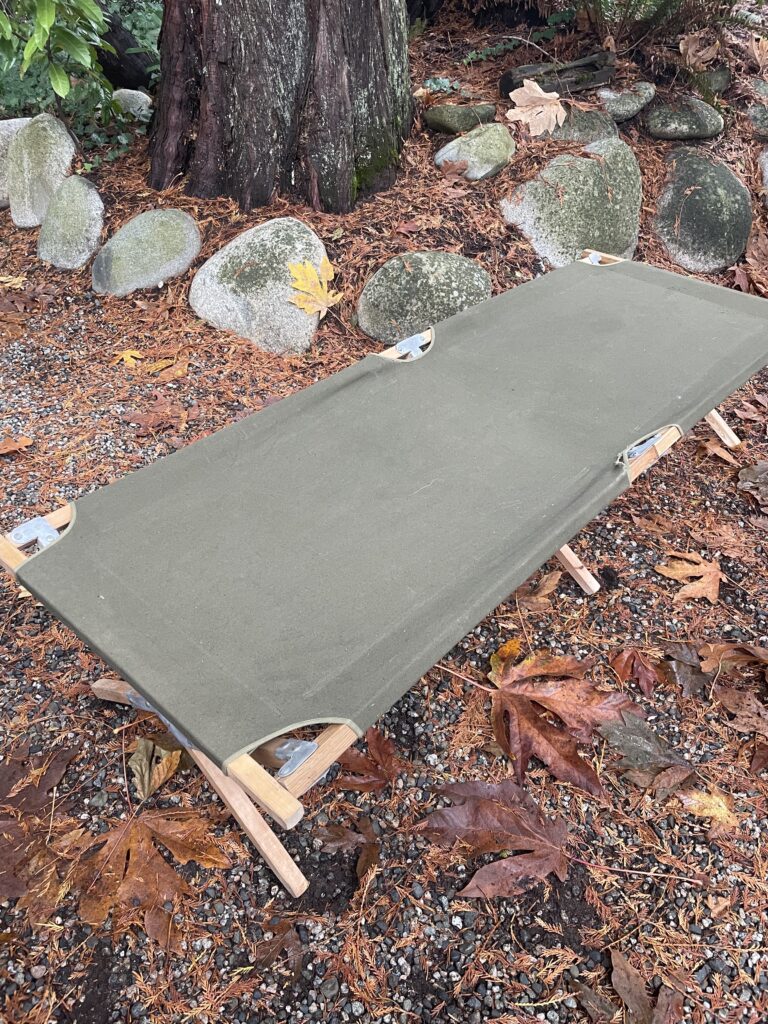
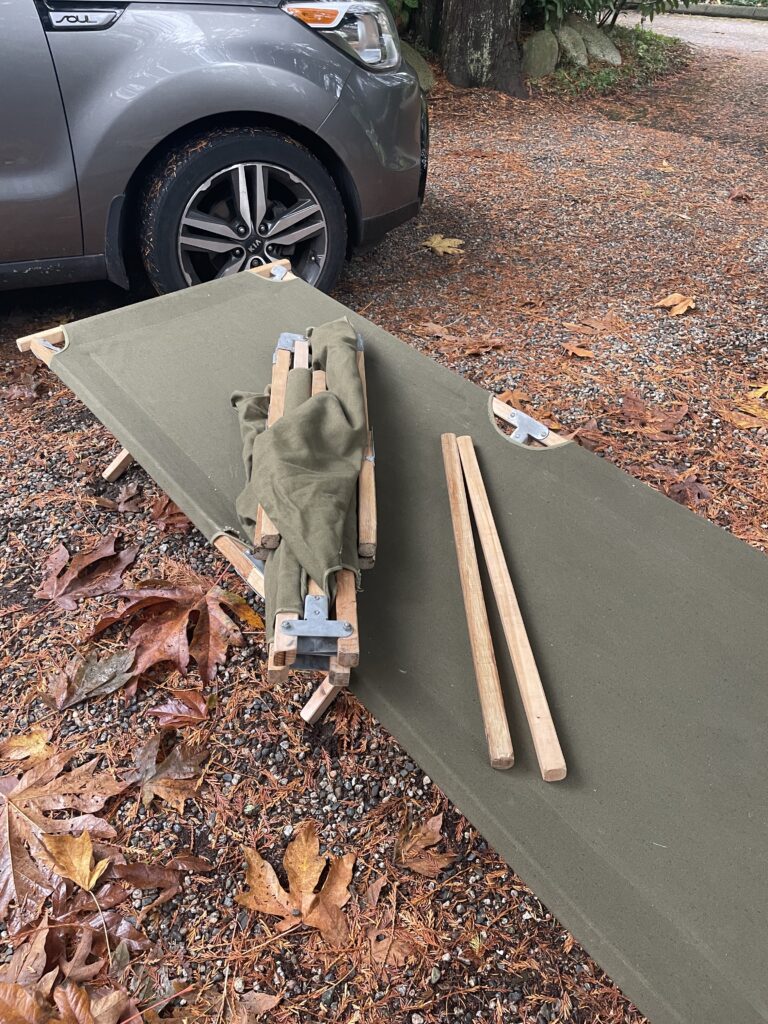
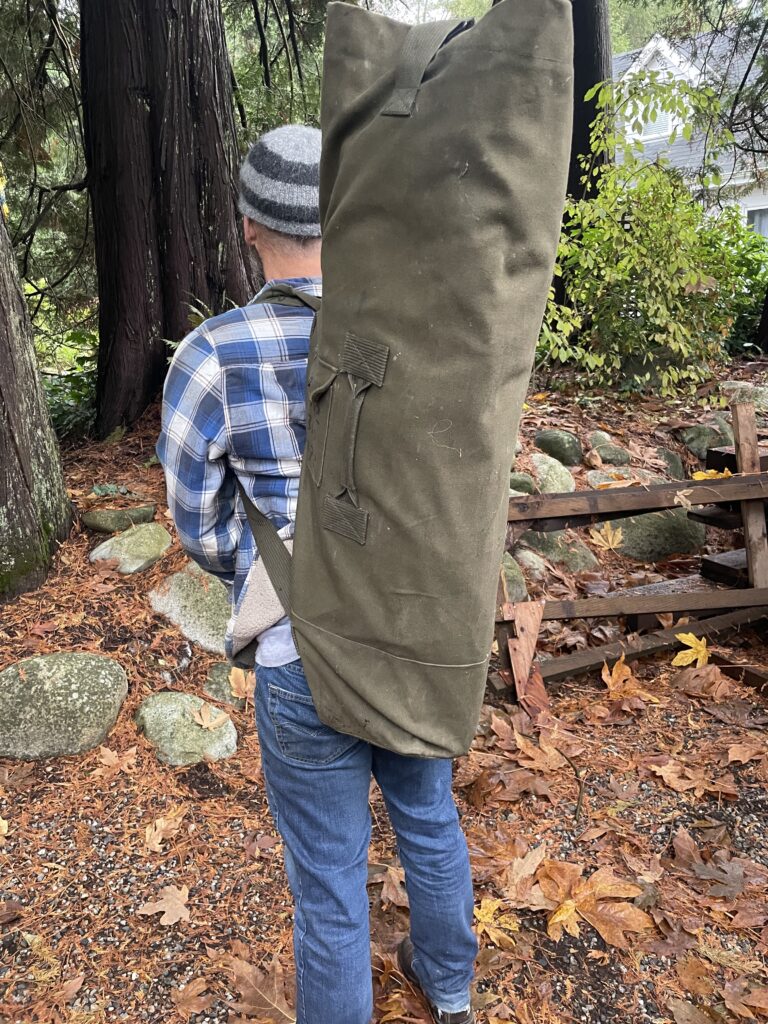
I just bought a wall tent off Facebook Marketplace and the seller threw in two wood frame folding camp cots.

They are the same design as what you’d get from Cabelas, only made of wood. If you find yourself camping in a wall tent in the winter these are exactly the kind of cots you need.

They are completely functional. Call/text me at 604-230-4225 or email rob@robchipman.net

What Skull is This?

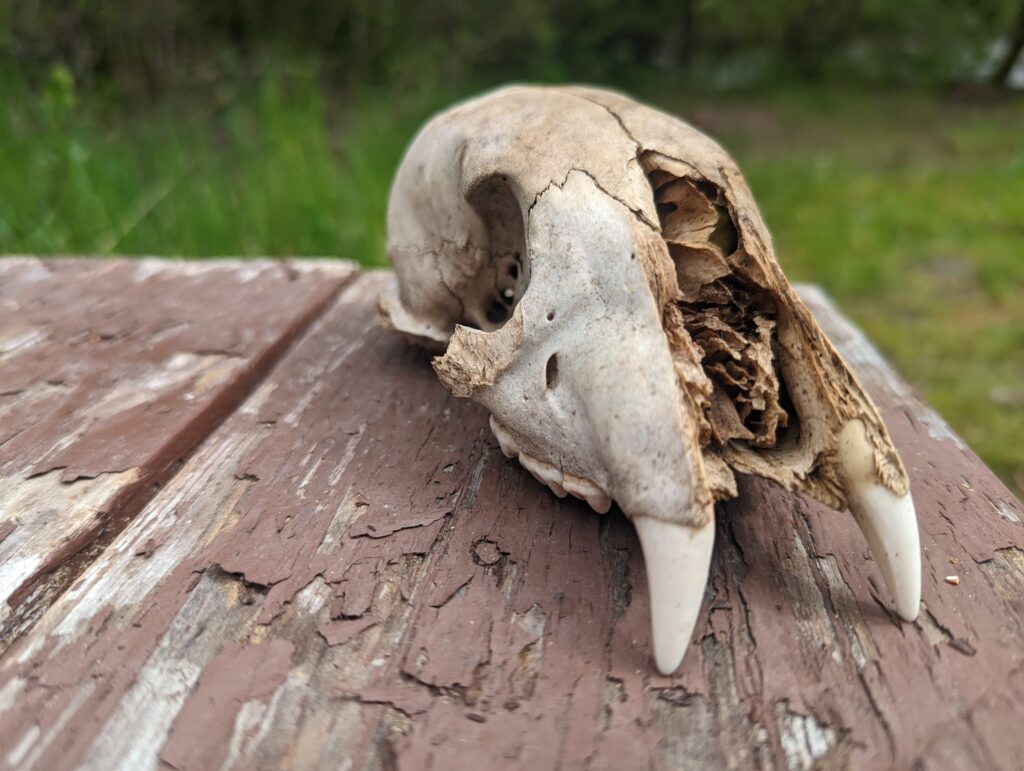
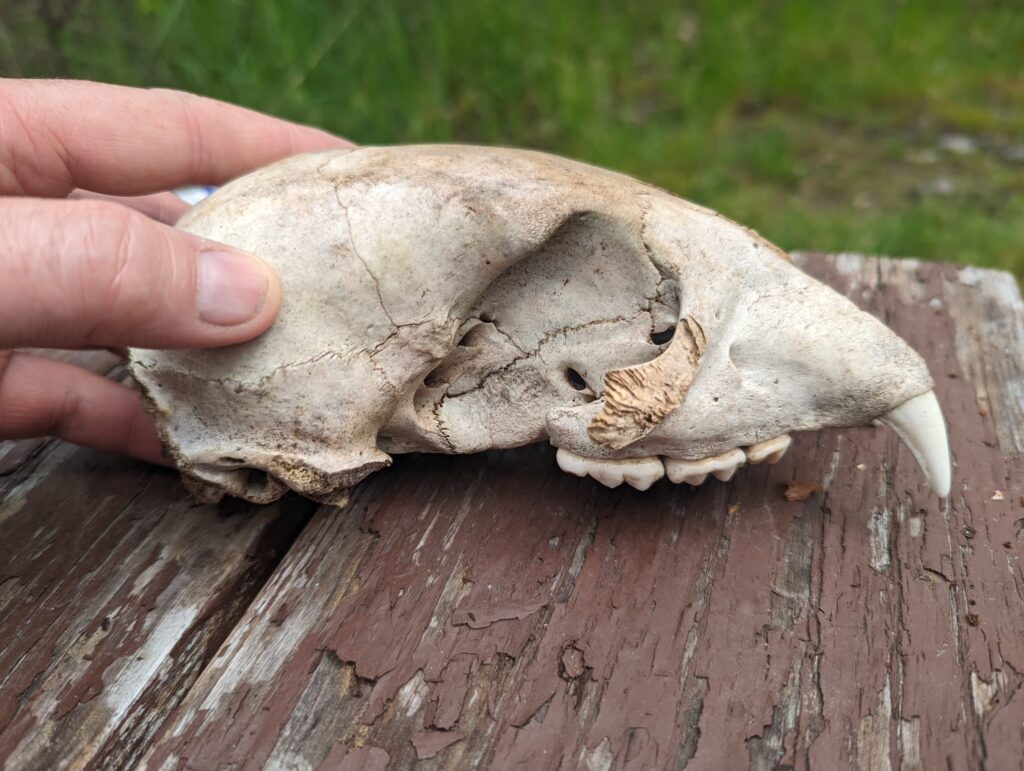
During our club spring bear hunt the kids found this skull:

Most of the nasal bones/cartilage are gone, but teeth are in pretty good shape.
Judging by the thumb this thing is about 5″ long.

So, what is it? Given that it was a spring *bear* hunt the obvious guess was bear, except it’s kind of small.

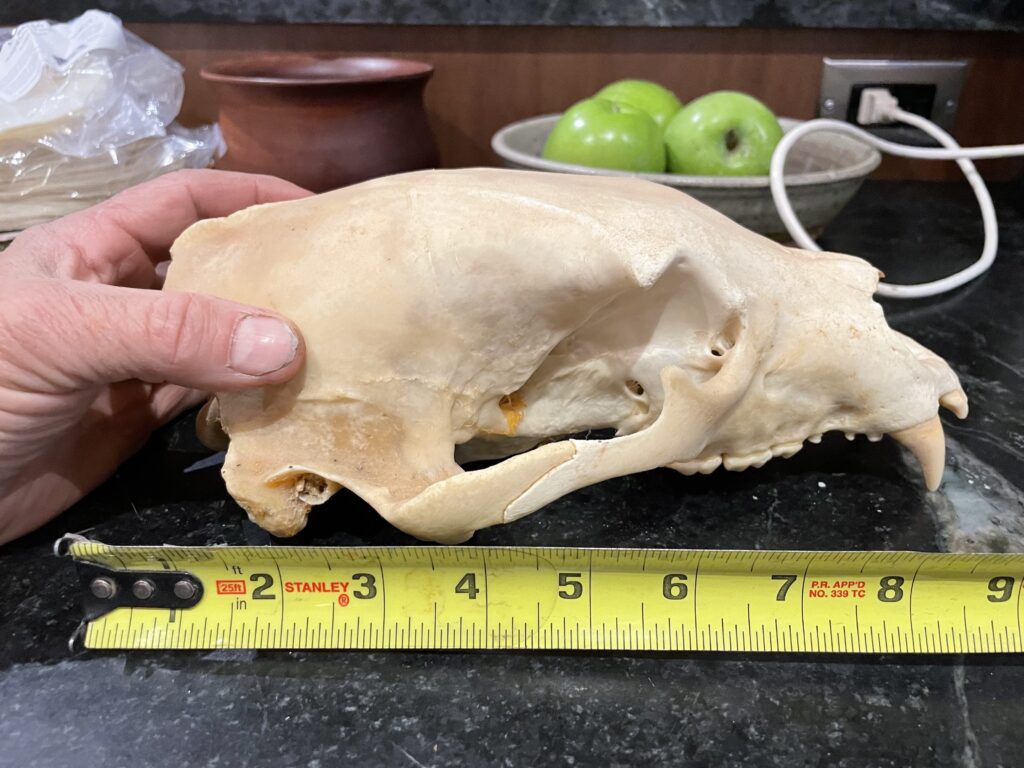
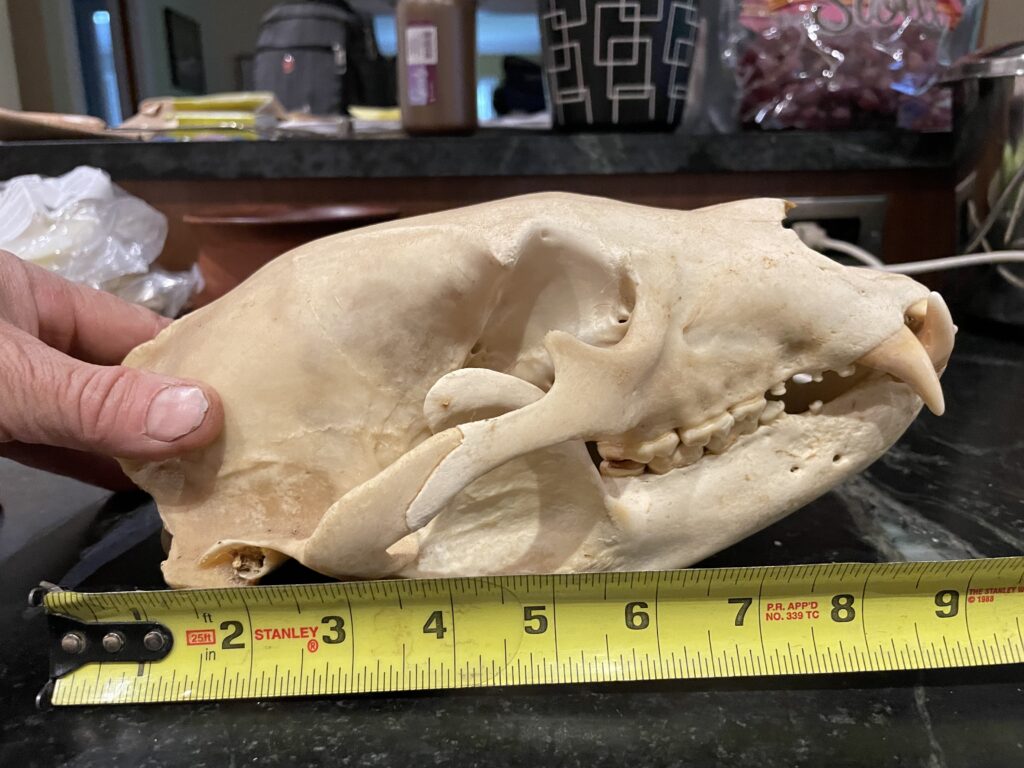
Here are some pics of a bear skull from a mid-sized sow I got a few years ago:

There are a lot of obvious similarities. The sow was probably about a 5 1/2 bear.

Our speculation? The skull the kids found was that of a black bear cub. Cause of death? Who knows?

What do you think?

Chilko and Thompson River Systems Steelhead

The plight of steelhead in BC is not well known to the general public. Some Fraser River system steelhead are in particularly bad straits.

What are termed “Fraser River late-run summer steelhead” is actually 10 different spawning stocks that utilize the Fraser watershed upstream of Hell’s Gate. A sub-group referred to as “Thompson and Chilcotin Steelhead” comprises 6 out of these 10 stocks. Although the label “Thompson and Chilcotin steelhead” has been hitting the news fairly regularly for the past few years, the problem is still not well enough understood.

If you do a quick Google search of the term and click on the “News” option you will see headlines like:

  • Fisheries Official Denies Coverup allegations over research into endangered BC steelhead
  • DFO Sup[pressing Research on steelhead
  • Thompson, Chilcotin steelhead trout in danger of extinction

The bad news goes back years and years.

This year we got some good news. On October 19 Robert Bison, Fisheries Stock Assessment Biologist, Fish and Wildlife, BC Ministry of Forests, released some numbers:

  • Total population forecast for spawning steelhead in the Thompson/Chilcotin systems is 505 (great news);
  • The population forecast for spawners in the Thompson is 339 (again, great news);
  • The population forecast for spawners in the Chilcotin is 166 (again, great news).

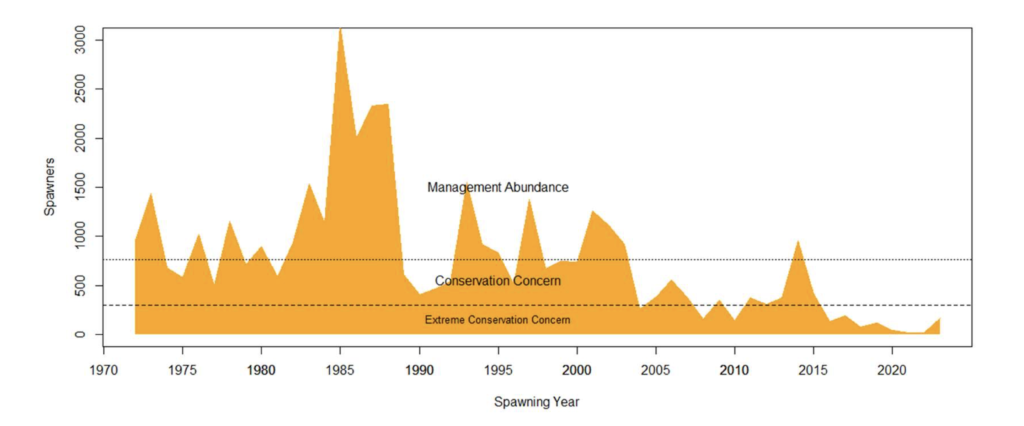
Here’s the problem: steelhead have been down so long that *everything* looks like up. That “great news” that I’m referencing? As Rob Bison points out, those numbers qualify as “Extreme Conservation Concern”. The spawner abundance for the Thompson ranks 40th out of a 44 year monitoring timeframe. The Chilcotin is just as bad – it ranks 44th out of a 52 year monitoring time frame.

For those who like graphics to demonstrate what’s up, here are two:

Thompson steelhead. The graph should go up and to the right, not down. This is so bad it’s hard to believe. Granted, 1985 was a good year, but numbers were estimated to be 3,510 for the Thompson.
Chilcotin steelhead. This graph is even worse than that Thomson steelhead graph. Again, 1985 was a good year, but estimates then were 3,149.

You can find Rob Bison’s release here. If I understand his release properly these numbers are spawners that return in late 2022, but will spawn in 2023.

What does this mean? Simple. It means we have to pull all the levers to save these fish, that we have to pull them hard and we have to pull them now. Habitat destruction, pinniped predation and unsustainable bycatch needs to stop. BCWF has been championing this issue and you can get some good background from the BCWF website. (North Shore Fish and Game is a BCWF member club and proud of it). You can find lots more info about the plight of steelhead on the web as well – for example at Steelhead Voices.

What should you do? The simplest thing is to contact your MLA and let them know that you care about steelhead. It’s really simple. Click the appropriate link below and send an email. You can use my text or put in your own.

“Dear [insert your MLA’s name]

I live in your constituency and you are my MLA.


Interior Fraser steelhead are on the brink of extirpation. Something must be done. We need an immediate COSEWIC listing for IFS as well as a SARA listing (something the BC Ministry of the Environment has pressed the Feds for in the past). I am very concerned about this issue and want you to take some kind of action. Please let me know that you support saving these fish by return email.

Thanks and regards”

If you’re on the North Shore here are quick links:

Susie Chant

Bowinn Ma

Karin Kirkpatrick

Jordan Sturdy

If you’re not on the North Shore you can find your MLA here.

Sending these emails isn’t hard but it is very helpful. Take a minute and give it a try It’s a great habit to develop.

Facebook Community Page

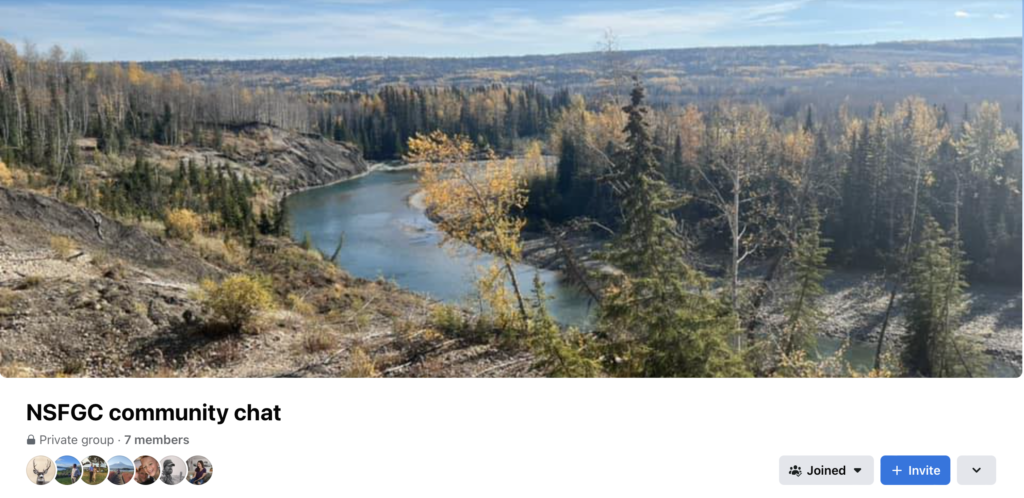
Ed has created a Facebook community chat group called “NSFGC community chat“, which you can reach by clicking on the link. It’s a place to connect get advice and share information about fishing ,hunting and Conservation for the members and friends of the North Shore Fish and Game Club.

The idea is to create a group chat to improve communication between members and potential new members of the North Shore Fish And Game Club. In the past we’ve used our monthly bulletin as well as WhatsApp chat groups to share information about club hunts, derbies and other events, but this community page should be a great improvement.

You can join by clicking the link, going to the community page and asking to join. Ed will get a message and add you. It’s that simple!